Fix Your Golf Swing
Diagnostic Guides by Swing Fault
Common swing faults explained cause first: why each one happens, how to tell which cause is yours, and step-by-step drills with video from the coaches who teach them. The same guides our AI golf swing analysis links to when it finds a fault.
New to the game? Start with the five fundamentals instead — grip, posture, strike, arc and clubface, in the order to learn them.
30 Guides
Swing Faults & Skills
139 Drills
With Coach Videos
Free to Read
No Sign-Up Needed
Golf for Beginners: The 5 Fundamentals
Before working on advanced positional fixes, learn these 5 essentials in teaching order — each one makes the next one possible.
Building a Repeatable Swing FoundationStep-by-Step
Great golf swings aren't built on quick band-aid fixes or endless position drills — they are built on a solid physical foundation. Master these 5 core building blocks in teaching order (grip, posture, low point, swing arc, and clubface control). Each step creates the biomechanical foundation required for the next, giving you a consistent, powerful motion that holds up under pressure.

The Grip
Your hands are the only thing touching the club, so they decide where the face points.
Range Feel Cue:
Fingers, not palms — and hold it like a tube of toothpaste you do not want to squeeze.

Posture & Balance
A repeatable swing needs a base that does not move — set your body so the club can find the ground the same way twice.
Range Feel Cue:
Hinge from the hips, arms hanging free from the shoulder sockets.

Ball Striking
Hit the ball first, then the ground — the low point of the swing belongs in FRONT of the ball.
Range Feel Cue:
Brush the grass on the target side of the ball.

The Swing Arc
The ball is to your side, so the club swings on an arc around your body — never in a straight line.
Range Feel Cue:
Turn back, shift through — the club goes around you, not at the target.

The Clubface & Release
The face has to rotate through the ball — holding it at the target the whole way is what leaves it open.
Range Feel Cue:
Waist-high past the ball, the face looks back at where you came from.
Grip, Setup & Ball Position(3)
Fix what is set before the club moves: grip, posture and where the ball sits in your stance
How to Fix Your Golf Grip: Weak, Strong or Neutral
How to tell a weak golf grip from a strong one, how each sets the clubface open or closed, and how to find the grip that squares the face with your release.

How to Fix Your Golf Posture
Bad golf posture (C-posture, S-posture, or standing up mid-swing) causes inconsistent contact before the club even moves. Here's how to fix each one.

Golf Ball Position: How to Fix It for Every Club
Where the ball belongs in your stance for wedges, irons, woods and driver, and how a ball too far back or too far forward shows up in your strike and direction.
Takeaway & Top of the Backswing(7)
Fix the positions that feed the downswing: takeaway, width, length, plane, and where the shaft and trail elbow point at the top

How to Fix Your Golf Takeaway
A poor takeaway either pushes the club outside your hands or whips it inside and open. Find out which one you have, whether it matters and the drills to fix it.

How to Fix a Narrow Backswing and Collapsing Arms
A narrow backswing has the arms folding in close to the chest at the top. Learn whether yours costs you speed or strike, and the drills that build real width.

How to Stop Overswinging in Golf
An overswing is the arms carrying on after your turn has stopped. Learn when a long backswing actually costs you and the drills that shorten it with control.

How to Fix a Flat Golf Swing Plane
A flat swing plane wraps the club around your body. Learn what causes a flat backswing, when it needs fixing, and drills for your shoulder turn and arm lift.

How to Fix a Laid-Off Golf Swing
A laid-off golf swing points the shaft left of target at the top. Learn when it needs fixing, what causes it, and the drills that square the club at the top.

How to Fix an Across-the-Line Backswing
Across the line means the shaft points right of target at the top. Learn when it matters, what causes it, and drills to fix arm run-on and the trail wrist.
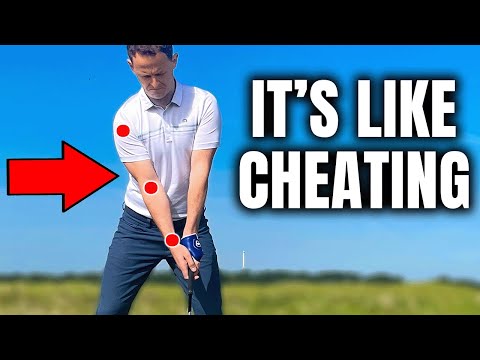
How to Fix a Flying Trail Elbow
A flying trail elbow points out behind you at the top. Find out when it matters, what it does to the club and the transition, and the drills that fold it down.
Ball Flight & Curve Misses(4)
Fix shots curving or starting offline: slice, hook, shank, and getting stuck in downswing
How to Fix a Golf Slice
Learn why your golf slice happens and how to fix it with grip, setup, and path drills that shallow your downswing and square the clubface at impact.

How to Fix a Hook in Golf
Learn how to fix a hook in golf: why the clubface closes at impact, the real causes (grip, path, sequencing), and drills to get the ball flight back.

How to Stop Shanking the Golf Ball
Stop shanking the golf ball by keeping the club's heel from moving toward the ball. Learn the real causes and drills that fix it for good.

How to Stop Getting Stuck in the Downswing
Getting stuck (arms trapped behind a fast-spinning body) causes blocks and snap hooks. Learn why it happens and the drills that re-sync your downswing.
Impact & Strike Quality(5)
Fix solid contact problems: fat/chunked shots, thin/topped hits, casting, flipping, and chicken wing

How to Stop Hitting Fat Shots
Stop hitting fat shots by fixing your low point. Learn the real causes (hanging back, casting, early extension) plus drills that fix heavy contact fast.

How to Stop Topping and Thinning the Golf Ball
Topping or thinning the golf ball comes from a rising swing center or a low point behind the ball. Learn the real causes and the drills that fix contact.

How to Stop Casting the Golf Club
Stop casting the golf club with drills that fix early release, poor sequencing, and lost lag. Learn causes, fixes, and FAQs from AI Golf School.

How to Stop Flipping at Impact
Flipping at impact (the clubhead passing your hands early) causes high, weak shots and fat-thin misses. Learn the causes and drills that restore shaft lean.

How to Fix a Chicken Wing Golf Swing
The chicken wing (a bent, pulled-in lead elbow through impact) robs you of power and causes weak fades. Here's why it happens and the drills that fix it.
Posture, Rotation & Body Mechanics(6)
Fix swing sequence and structure: early extension, over-the-top, swaying, weight shift, hip rotation and tempo

How to Fix Early Extension in the Golf Swing
Fix early extension in your golf swing: why hips thrust toward the ball, the real causes, and step-by-step drills to stay in posture through impact.

How to Stop Coming Over the Top
Fix the golf swing's biggest transition fault: stop coming over the top with drills that shallow your path, fix your takeaway, and square the clubface.

How to Stop Swaying in the Golf Swing
Swaying (sliding laterally instead of rotating) wrecks contact and power. Learn why your hips drift off the ball and the drills that turn sway into coil.

How to Improve Weight Shift in the Golf Swing
Learn how to improve weight shift in the golf swing: the real causes (reverse pivot, sway, hanging back) and the drills that fix your sequence for good.

How to Improve Hip Rotation in the Golf Swing
Poor hip rotation costs you speed and consistency. Learn what limits your hip turn (mobility, setup, or concept) and the drills that build a real coil.

How to Improve Your Golf Swing Tempo
Fix rushed, handsy swing tempo with a proven 3:1 ratio, sequencing drills, and transition fixes that stop the downswing from outracing your body.
Skills & Shot-Making(5)
Build the skills behind a repeatable swing: connection, compression, clubhead speed, consistency, and shaping the ball on command

How to Stay Connected in the Golf Swing
Connection is the arms and body moving as one unit. Lose it and you get inconsistent strikes, a narrow arc and a chicken wing. Here is what causes disconnection and the drills that fix it.

How to Compress the Golf Ball
Compression is a low point ahead of the ball, not extra effort. Here is what actually creates a compressed strike, why trying harder makes it worse, and the drills that build it.

How to Increase Clubhead Speed in Golf
Clubhead speed comes from width, sequencing, ground force and overspeed training, not from swinging harder. Find where your speed leaks and train it safely.

How to Make Your Golf Swing More Consistent
Consistency is a dispersion measurement, not a feeling. Here is why golfers misjudge their own progress, what actually causes scattered strikes, and how to measure whether you are improving.

How to Shape Golf Shots: Draws, Fades and Start Line
Shot shape is the gap between clubface and swing path. Learn why start line is almost entirely face, why you must fix it first, and the drills that build a draw or fade on command.