How to Stop Hitting Fat Shots
By AI Golf School · Updated · Jump to the video checklist

⚡ Quick Answer & Diagnosis
Fat shots happen when the low point of your swing bottoms out behind the ball instead of in front of it. The usual culprits are hanging back on your trail foot, casting the club early, or losing posture in the downswing. Shift your weight forward before impact and keep the shaft leaning toward the target at contact to move the low point where it belongs.
A fat shot means the club hits the ground before it hits the ball. You lose speed to the turf, the ball comes up short, and on firmer lies you can feel the shock all the way up your arms. It's not bad luck and it's not a swing you have to live with: it's a low point problem. Every golf swing has a low point, the spot in the arc where the club bottoms out. When that spot lands behind the ball instead of just after it, you catch it heavy.
The low point moves for a handful of predictable reasons: your weight stays on your trail foot too long, your wrists release the club early, you lose your spine tilt and stand up out of the shot, or your head and upper body dip down in transition. Any one of these pushes the bottom of your arc backward, and the ground gets there before the ball does. It's usually worse with irons and wedges, where you need a descending strike, and it tends to show up under pressure or on tighter lies where there's less margin for error.
Most golfers guess at which of these is happening in their own swing, then work on the wrong fix for months. Running your swing through an AI swing analysis will show you exactly where your low point is and what's moving it, so you can skip the guesswork and go straight to the right drill.
Why do I hit the ground before the golf ball?
A fat shot means the club enters the turf before reaching the ball. With an iron, the goal is ball-first contact followed by turf contact. Ball position, the depth of the swing arc and where the arc bottoms out all matter; moving your weight forward is not a universal fix.
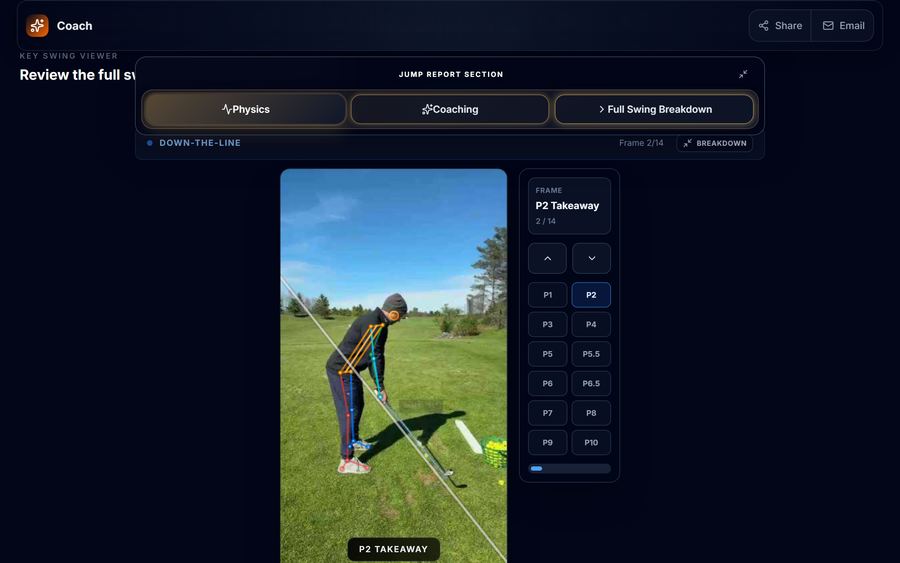
What to look for in your swing video
Film face-on with the phone near hand height, square to your target line. Include both feet, the ball and the ground around it. Use the same club and ball position for your comparison swings.
- 1. Address: Locate the ball relative to your stance. Compare good and heavy strikes before changing ball position; an inconsistent setup can obscure the pattern.
- 2. Downswing: Follow your torso and hands over several frames. Note a large dip or movement away from the target, but do not infer foot pressure from body position alone.
- 3. Contact: Check where the club first touches the turf. A mat can disguise an early strike by letting the club bounce into the ball, so combine the video with actual contact feedback.
A face-on recording helps compare setup and movement. It does not measure pressure under your feet or guarantee a precise low-point measurement. If impact is obscured, use a visible ground reference and the strike result rather than guessing from a skeleton overlay.
Try one change at your next practice session
Begin with slow rehearsals of the shaft-lean drill below. On a practice area where marking the turf is allowed, use a line perpendicular to the target as a contact reference. Make five small swings and check whether the first turf contact is on the target side of the line. Add a ball at the line only when you can repeat that contact.
Watch the drill: Alignment Stick Shaft Lean DrillCheck your progress: Count ball-first strikes out of five and compare the next set at the same speed. Progress to a longer swing when contact is repeatable. Avoid forcing the handle forward if that makes the club dig more deeply.
Further reading
Why it happens
Hanging back on your trail side
If your weight stays loaded on your trail foot into impact instead of shifting toward the target, your whole swing center stays back with it. The low point follows your body's center of mass, so when your weight hangs back, the low point does too: landing behind the ball instead of under your lead side.
Casting or early release
Casting is releasing your wrist angle (the lag between your lead arm and the clubshaft) too early in the downswing, before the hands reach the ball. This throws the clubhead out ahead of your hands and pulls the low point backward, so the club is already bottoming out before it gets to the ball.
Early extension losing your posture
Early extension is standing up out of your spine tilt in the downswing: your hips thrust toward the ball and your upper body straightens. Losing that forward tilt changes the geometry of your swing arc and, combined with the arm and hand compensations it forces, commonly drags the low point back and steepens the strike.
Head or upper body dipping in transition
Adding extra knee flex or letting your head drop as you start the downswing lowers your entire swing center. Lower swing center means the low point moves down and back relative to the ball, so you strike the ground before you reach it.
Ball position and setup
Playing the ball too far back in your stance, or setting up with too much weight or tilt toward your trail side at address, puts the ball behind where your natural low point wants to be. Even a technically sound swing will hit it fat if the ball simply isn't positioned where the arc bottoms out.
How to fix it, step by step
- 1
Check your ball position and setup weight first
Before changing your swing, make sure the ball isn't too far back in your stance and that your weight at address isn't already loaded onto your trail foot. A simple setup fix sometimes solves the whole problem.
- 2
Get your weight moving forward before impact
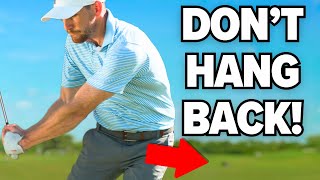
Use the Stepping and Striking Drill to feel your pressure land firmly on your lead foot before the club arrives at the ball. This directly fixes hanging back, the most common cause of heavy contact.
- 3
Train the low point with a ground barrier
Do the Stop Chunking Your Golf Shots drill or the Towel Drill for Low Point Control: both put a towel a few inches behind the ball so you get instant feedback the moment your low point drifts too far back.
- 4
Build shaft lean so you stop casting
Work through the Alignment Stick Shaft Lean Drill to feel your hands ahead of the clubhead at impact. If you're casting or flipping the club early, this stops it by making you keep the shaft leaning forward.
- 5
Fix loss of posture with a physical checkpoint
If you tend to stand up out of your swing, the Chair Drill for Early Extension gives you a touch reference: stay in contact with the chair through impact and you'll stop thrusting your hips forward.
- 6
Stabilize your swing center so your head doesn't dip
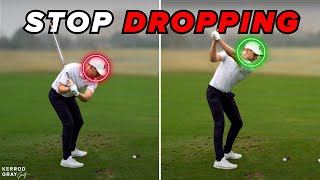
The Reaching for the Ceiling Fan Drill trains extension and turn in the backswing instead of dropping down, which keeps your swing center and your low point from sinking behind the ball.
The best drills for this fault
Ranked by effectiveness. Each drill page includes step-by-step instructions and a video demonstration.
 1
1Alignment Stick Shaft Lean Drill
by HackMotion
 2
2Stepping and Striking Drill (Dynamic Transfer)
by Kerrod Gray Golf
3Towel Drill for Low Point Control
by HackMotion
 4
4Chair Drill for Early Extension
by Matthew Galley
 5
5Stop Chunking Your Golf Shots
by Free Form Golf
 6
6Reaching for the Ceiling Fan Drill (Anti-Dipping)
by Kerrod Gray Golf
 7
7Fix Fat Shots Forever
by Clay Ballard
 8
8Single-Arm Drop Drill (Stop OTT)
by Mark Crossfield
Training aids that help
Optional. Every drill above works with a club and an alignment stick - these just make the feedback harder to ignore.
Whys Pressure Plate with Power Wedge
Pressure plate board trainer is a versatile golf training aid designed to improve your swing, balance, and weight shift for more accurate shots.
View on AmazonSequins Divot Board
A mat that changes color when struck. Gives instant visual feedback on whether you hit behind the ball (Fat) or topped it (Thin), and your swing path.
View on AmazonDownshift Board
A dynamic tilt board designed to enhance weight transfer and pressure awareness. Facilitates correct body sequencing by providing physical feedback when shifting pressure.
View on AmazonAs an Amazon Associate we earn from qualifying purchases.
Frequently asked questions
Why do I hit fat shots with my irons but not my driver?
Irons and wedges require a descending strike with the low point in front of the ball, so any backward low point shift shows up immediately as fat contact. Driver is played off a tee with a more level or slightly ascending strike, so the same low point flaw often doesn't produce the same result: it just costs you distance instead.
Is hitting off mats hiding my fat shots?
Yes. Mats let the club skid through turf that a real fairway or rough would grab, so a swing that would be fat on grass can still feel and sound clean on a mat. If you only practice on mats, test yourself on real turf occasionally to see your true low point.
Could my equipment be causing fat shots?
Clubs that are too long for you, or wedges with too little bounce for your angle of attack, can make heavy contact more likely and less forgiving. But equipment is rarely the root cause: fix the swing first, then have your clubs checked if the problem persists.
How long does it usually take to stop hitting it fat?
Once you identify the actual cause (hanging back, casting, early extension, or dipping), most golfers feel a real change within a few range sessions of focused drill work. Fixing the habit under course pressure, where the old pattern tends to return, usually takes longer than fixing it on the range.
Why do I only fat it off tight or firm lies?
Tight lies remove the margin for error a fluffy lie gives you: there's no grass cushion to save a slightly-behind low point. If your fat shots only show up on firm turf, your low point is probably close but still landing an inch or two behind the ball.
Are fat shots and thin shots caused by the same thing?
They're closely related but opposite in timing. Both come from poor low point control, but a fat shot means the low point is too far behind the ball while a thin shot often means you've overcorrected and pulled the low point up or past it. Many golfers swing between the two while they're fixing the underlying pattern.