How to Fix Your Golf Takeaway
By Paul Harris · Swing Kinematics Lead · Updated

⚡ Quick Answer & Diagnosis
Most takeaway faults go one of two ways: the hands push the club outside while the chest stays still, or the forearms roll and whip the club inside with the face opening. Fix both by starting the club with your chest, keeping the clubhead just outside the hands to hip height, and matching the clubface to your spine angle at that checkpoint.
| Biomechanical Root Cause | Corrective Action & Fix |
|---|---|
| The hands and arms start the swing instead of the torsoIf the first move is the hands, the club can go anywhere: out if they push, in if they roll. When the chest starts the club moving, the hands have no chance to take over, and both directions of takeaway fault get harder to make. This is the common thread behind most takeaway problems. | Start the club with your chestJames Parker's One Piece Takeaway Drill makes the torso do the work. Choke down until the butt end of the club touches your belly button, take your setup, and rotate your torso to move the club while keeping the butt end attached to your belly. Stop when the club is parallel to the ground and check it is still connected. Neither pushing nor rolling is possible without the handle leaving your body. |
| The hands push away while the chest stays stillThis is the outside takeaway. The arms separate from the body early and shove the club outside the line of the hands and feet. From there the club tends to get across the line or high and steep at the top, and the downswing has to recover from a position the body cannot deliver. | Keep the lead arm on your chestFor the outside takeaway, use Porzak Golf's headcover drill. Tuck a headcover or glove under your lead armpit and make slow half swings, starting the club with chest and torso rotation. If it drops during the takeaway, your lead arm has disconnected and pushed the club away early. Jon Watts's Simple One Piece Takeaway gives similar feedback with a light stick across your chest above the elbows: it should tilt down on the target side as you turn, with the arms staying engaged with the body. |
| Going straight back for too longThe old 'low and slow, straight back' advice keeps the club travelling away from you long after it should have started working around and up. Holding it on that line pushes the hands out with it. A small upward wrist set as the hands pass the trail thigh is what stops the shaft being shoved outside. | Check the hip-high position: hands in, club outUse Danny Maude's takeaway checkpoint with David Leathem Golf's 'hands in, club out' feel. In slow motion, start the club back low, keeping the shaft and hands in line with your feet rather than drifting outside them, and feel the hands work slightly inward with the chest while the clubhead stays just outside the hands. As the hands pass the trail thigh, add a small upward wrist set so the shaft does not get shoved outside. At the hip-high checkpoint, the face should match your spine angle, not look twisted open. |
| The forearms roll and whip the club insideThis is the opposite fault. The lead forearm rotates early, the clubhead swings in behind the hands, and the face fans open. It feels on plane but leaves the club laid off and open at the top, which forces either a reroute over the top or a late flip to square the face. | Stop the forearm rollFor the inside, rolled takeaway, use two drills from Kerrod Gray Golf. In his version of Pete Cowen's Takeaway Drill, hold a towel with your hands close together and wring it as if it were soaking wet, keeping that opposing pressure through the takeaway so the hands stay in front of the chest instead of rolling the club inside. In his Alignment Stick Takeaway Drill, a stick held alongside the grip runs up your lead side: it stays in contact for the first foot, slides down your lead thigh as the wrists hinge, and leaves your side at once if you roll the wrists or lift the arms. |
| The clubface twists open earlyWhichever way the club travels, the face can twist open in the first few feet. At hip height a neutral face roughly matches the angle of your spine. If it looks open by then, you will spend the rest of the swing trying to close it, and that usually shows up as a slice or a hand-flip at impact. | Check the hip-high position: hands in, club outUse Danny Maude's takeaway checkpoint with David Leathem Golf's 'hands in, club out' feel. In slow motion, start the club back low, keeping the shaft and hands in line with your feet rather than drifting outside them, and feel the hands work slightly inward with the chest while the clubhead stays just outside the hands. As the hands pass the trail thigh, add a small upward wrist set so the shaft does not get shoved outside. At the hip-high checkpoint, the face should match your spine angle, not look twisted open. |
The takeaway is the first two or three feet of the swing, and it sets up everything after it. There are two common ways to get it wrong. In one, the hands push away from the body while the chest stays passive, and the club travels outside the hands. In the other, the forearms roll early and whip the club inside and behind you, fanning the face open before the body has turned.
A bad takeaway is a contributor, not the root. Plenty of golfers take it away oddly and still play well because they get the club into a good position by the top. The takeaway matters when it carries forward: an outside start that leads to a club across the line and a steep throw down, or an inside roll that leaves the club laid off and forces a reroute over the top or a stuck, flippy delivery. Fix it when it feeds a problem in transition, not just because it looks unusual.
Because the two faults are opposites, the drill that helps one can make the other worse. A swing video, or an AI swing analysis, settles which you have by showing where the clubhead sits relative to your hands at hip height and what the face is doing. Directions below are for right-handed golfers; left-handers reverse them.
Why it happens
The hands and arms start the swing instead of the torso
If the first move is the hands, the club can go anywhere: out if they push, in if they roll. When the chest starts the club moving, the hands have no chance to take over, and both directions of takeaway fault get harder to make. This is the common thread behind most takeaway problems.
The hands push away while the chest stays still
This is the outside takeaway. The arms separate from the body early and shove the club outside the line of the hands and feet. From there the club tends to get across the line or high and steep at the top, and the downswing has to recover from a position the body cannot deliver.
Going straight back for too long
The old 'low and slow, straight back' advice keeps the club travelling away from you long after it should have started working around and up. Holding it on that line pushes the hands out with it. A small upward wrist set as the hands pass the trail thigh is what stops the shaft being shoved outside.
The forearms roll and whip the club inside
This is the opposite fault. The lead forearm rotates early, the clubhead swings in behind the hands, and the face fans open. It feels on plane but leaves the club laid off and open at the top, which forces either a reroute over the top or a late flip to square the face.
The clubface twists open early
Whichever way the club travels, the face can twist open in the first few feet. At hip height a neutral face roughly matches the angle of your spine. If it looks open by then, you will spend the rest of the swing trying to close it, and that usually shows up as a slice or a hand-flip at impact.
How to fix it, step by step
- 1
Find out which takeaway you have, and whether it matters
Film down the line and pause when the club reaches hip height. If the clubhead is well outside your hands, or the hands have pushed out over your toes, you have the outside version. If the clubhead is behind your hands and the face points toward the sky, you have the inside, rolled version. Then pause at the top and halfway down: if the club gets to a good position and your strike is solid, the takeaway may not be worth changing.
- 2
Start the club with your chest
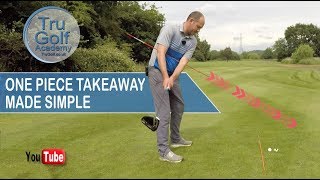
James Parker's One Piece Takeaway Drill makes the torso do the work. Choke down until the butt end of the club touches your belly button, take your setup, and rotate your torso to move the club while keeping the butt end attached to your belly. Stop when the club is parallel to the ground and check it is still connected. Neither pushing nor rolling is possible without the handle leaving your body.
- 3
Keep the lead arm on your chest
For the outside takeaway, use Porzak Golf's headcover drill. Tuck a headcover or glove under your lead armpit and make slow half swings, starting the club with chest and torso rotation. If it drops during the takeaway, your lead arm has disconnected and pushed the club away early. Jon Watts's Simple One Piece Takeaway gives similar feedback with a light stick across your chest above the elbows: it should tilt down on the target side as you turn, with the arms staying engaged with the body.
- 4
Check the hip-high position: hands in, club out
Use Danny Maude's takeaway checkpoint with David Leathem Golf's 'hands in, club out' feel. In slow motion, start the club back low, keeping the shaft and hands in line with your feet rather than drifting outside them, and feel the hands work slightly inward with the chest while the clubhead stays just outside the hands. As the hands pass the trail thigh, add a small upward wrist set so the shaft does not get shoved outside. At the hip-high checkpoint, the face should match your spine angle, not look twisted open.
- 5
Stop the forearm roll
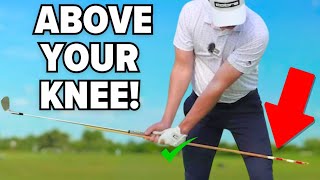
For the inside, rolled takeaway, use two drills from Kerrod Gray Golf. In his version of Pete Cowen's Takeaway Drill, hold a towel with your hands close together and wring it as if it were soaking wet, keeping that opposing pressure through the takeaway so the hands stay in front of the chest instead of rolling the club inside. In his Alignment Stick Takeaway Drill, a stick held alongside the grip runs up your lead side: it stays in contact for the first foot, slides down your lead thigh as the wrists hinge, and leaves your side at once if you roll the wrists or lift the arms.
- 6
Blend it into a full swing
Rehearse the takeaway on its own, then into a half swing, then a full swing, filming the hip-high position at each stage. A new takeaway feels strange for a while; judge it by where the club arrives at the top and how you strike the ball, not by how it feels.
The best drills for this fault
Start with the first drill and move down the list if it doesn't fit your swing. Each drill page has step-by-step instructions and the coach's video.
 1
One Piece Takeaway Drill
by James Parker
 2
Hands In, Club Out Takeaway Drill
by David Leathem Golf
 3
Perfect Golf Swing Takeaway Drill
by Danny Maude
 4
Headcover Under the Lead Arm Takeaway Drill
by Porzak Golf
 5
Pete Cowen's Takeaway Drill
by Kerrod Gray Golf
 6
Alignment Stick Takeaway Drill
by Kerrod Gray Golf
 7
Simple One Piece Takeaway
by Jon Watts
Training aids that help
Optional. Every drill above works with a club and an alignment stick - these just make the feedback harder to ignore.
Tour Striker PlaneMate
Band-and-rod takeaway and transition trainer that helps keep the club connected to the body and on a repeatable path.
View on AmazonSwingyde Golf Swing Trainer
Shaft-mounted wrist-set trainer that gives a repeatable takeaway and top-of-backswing checkpoint.
View on AmazonHack Motion Golf Swing Analyzer
HackMotion is a golf swing analyzer that uses wrist angle tracking to provide real-time feedback, personalized drills, and virtual coaching for improving consistency and performance.
View on AmazonAs an Amazon Associate we earn from qualifying purchases.
Frequently asked questions
Should the takeaway be a one-piece movement?
The torso should start the club moving, and the arms should stay in front of the chest. That does not mean the wrists stay completely passive. A small upward wrist set as the hands pass the trail thigh is part of a good takeaway, and it is what stops the club going too far outside or getting stuck straight back.
How do I know if my takeaway is too far inside?
From down the line at hip height, the clubhead will be behind your hands rather than just outside them, and the face will be pointing up at the sky instead of matching your spine angle. It often feels like a nice rounded swing. The giveaway is usually at the top, where the club ends up laid off with the face open.
Does a bad takeaway always lead to a bad swing?
No. The takeaway is the start of the pattern, not the root of it. Many golfers recover from an unusual takeaway by the top of the swing and deliver the club well. If yours does, leave it. Work on it when video shows the takeaway feeding a problem in transition, such as a club across the line or laid off that you then have to reroute.
Can my takeaway cause a slice or over-the-top move?
It can, from either direction. An outside takeaway often leaves the club steep and across the line, and the downswing throws it out. An inside, rolled takeaway leaves it laid off and open, and many golfers instinctively loop it over the top to get back to the ball. That is why it is worth knowing which version you have before you pick a drill.
Going to the range to practice this drill?
Save your 1 Free AI Swing Analysis Credit now. We'll send your pass and our 2-minute camera setup checklist directly to your phone so you're ready when you step onto the mat.
Already have a swing video on this device? Analyze it now