How to Fix Your Golf Grip: Weak, Strong or Neutral
By Paul Harris · Swing Kinematics Lead · Updated

⚡ Quick Answer & Diagnosis
A weak grip (lead hand turned toward the target, one knuckle or fewer showing) tends to leave the clubface open; a strong grip (three or more knuckles showing) tends to close it. There is no single correct grip. The right grip is the one that returns the face square with your own release, and you check it by where the ball starts and how much it curves.
| Biomechanical Root Cause | Corrective Action & Fix |
|---|---|
| Lead hand turned too far toward the target (weak grip)With one knuckle or fewer showing, the face has to rotate a long way to get back to square, and most of the time it doesn't. The ball starts right and curves further right, or flies high and weak. Golfers who try to save it by flipping the hands late also hit the odd low hook, which makes a weak grip feel like it produces both misses. | If the face is open, strengthen one checkpoint at a timeIn Golf Distillery's How to Fix your Slice with your Grip, move the lead hand from weak toward neutral or slightly stronger, match the trail hand so both 'V's agree, then make slow half swings and confirm the face can return square without a last-second flip. Kerrod Gray Golf's grip drill works the same way, with two to three knuckles showing, waist-high rehearsals and soft punch shots before full swings. Change one checkpoint, test the flight, and stop when the curve settles. |
| Lead hand turned too far away from the target (strong grip)With three or more knuckles showing and the trail hand underneath the handle, the face is set up to close quickly. Add normal forearm rotation through impact and it races shut: low hooks, pulls and shots that start on line and dive left are the typical pattern. | If the face is closed, soften a strong grip toward neutralHarry Shaw Golf's Managing a Strong Grip: Neutralize and Rotate routine reduces the visible lead-hand knuckles by one checkpoint, then uses half swings with body rotation, not hand roll, controlling the face. If the ball still starts left too early, neutralize the trail hand further. Golf Distillery's Hooking - Is your Grip Causing your Golf Hooks? adds slow waist-high swings to see whether the face is rolling closed too early. Build back to full speed only once the face stops racing shut at half speed. |
| Hands that fight each otherA strong lead hand with the trail hand on top of the handle, or a weak lead hand with the trail hand turned under, leaves the two 'V's pointing in different directions. Each hand is trying to put the face somewhere different, so it changes from shot to shot, with misses both ways and no clear pattern. | Make the trail hand agree with the lead handBoth hands should work as one unit, with the two 'V's roughly parallel. Set the lead hand first, then place the trail hand so it supports a square face instead of holding it open, as in The Art of Simple Golf's Grip and Clubface Check. Make slow rehearsals where the face squares on its own, and confirm it with short shots before going back to full speed. |
| A grip that doesn't match your releaseWhere the face points at impact comes from the grip and the release together. A player with a lot of forearm rotation can hook it from a neutral grip, while a player who turns hard and holds the face off may need a stronger grip just to square it. Copying a grip from a photo without checking it against your own release is how golfers swap one miss for the opposite one. | Read your ball flight before changing anythingHit a few short shots with your current grip and watch where the ball starts and which way it curves. Starting right and curving right points to an open face; starting left or turning hard left points to a closed one. If the ball starts near your target and only curves a little, your grip is probably fine and the miss is coming from your path. Golf Distillery's grip checks for slices and hooks both use this start-line and curve test before any bigger swing change. |
| The grip drifts back to the old habitA new grip feels wrong for a while, and between shots the hands quietly slide back to the position that feels normal. Halfway through a session the old grip and the old miss are back, often without the golfer noticing. | Rebuild the grip before every shotA new grip will feel uncomfortable for a while, so don't trust what feels natural. Kerrod Gray Golf's advice is to reset the grip before every shot, and the 45-degree check from step one makes that quick. Start each session with punch shots to confirm the face is behaving, and check your hands again whenever the old miss reappears. |
Your hands are the only contact you have with the club, so the grip decides where the clubface points more than any other part of your setup. Turn your hands a little one way on the handle and the face tends to arrive open; turn them the other way and it tends to arrive closed. That is why a grip change can clean up a slice in one session, and why the wrong grip change can swap a slice for a hook just as quickly.
For a right-handed golfer, a weak grip has the lead hand turned toward the target so you see one knuckle or fewer at address, with the 'V' between thumb and forefinger pointing at your chin. A strong grip turns the lead hand away from the target so three or more knuckles show and the 'V' points outside the trail shoulder. Neutral sits in between: about two knuckles, with both 'V's pointing toward the trail shoulder. These are reference points, not rules; plenty of good players make a strong or weak grip work because their release matches it. Left-handed golfers reverse every direction in this guide.
The real test of a grip is the ball flight, not how the hands look in a photo. A swing video or AI swing analysis can show your hands at address and the face at impact side by side, which tells you whether the grip or the swing is the part that needs to change.
Why it happens
Lead hand turned too far toward the target (weak grip)
With one knuckle or fewer showing, the face has to rotate a long way to get back to square, and most of the time it doesn't. The ball starts right and curves further right, or flies high and weak. Golfers who try to save it by flipping the hands late also hit the odd low hook, which makes a weak grip feel like it produces both misses.
Lead hand turned too far away from the target (strong grip)
With three or more knuckles showing and the trail hand underneath the handle, the face is set up to close quickly. Add normal forearm rotation through impact and it races shut: low hooks, pulls and shots that start on line and dive left are the typical pattern.
Hands that fight each other
A strong lead hand with the trail hand on top of the handle, or a weak lead hand with the trail hand turned under, leaves the two 'V's pointing in different directions. Each hand is trying to put the face somewhere different, so it changes from shot to shot, with misses both ways and no clear pattern.
A grip that doesn't match your release
Where the face points at impact comes from the grip and the release together. A player with a lot of forearm rotation can hook it from a neutral grip, while a player who turns hard and holds the face off may need a stronger grip just to square it. Copying a grip from a photo without checking it against your own release is how golfers swap one miss for the opposite one.
The grip drifts back to the old habit
A new grip feels wrong for a while, and between shots the hands quietly slide back to the position that feels normal. Halfway through a session the old grip and the old miss are back, often without the golfer noticing.
How to fix it, step by step
- 1
Find out where your grip sits now
Use Danny Maude's Neutral Grip Trainer as a reference: hold the club in front of you at 45 degrees, set the lead hand so you see two knuckles and the trail hand so its 'V' points at your trail shoulder, then keep that pressure as you lower the club to the ball. Compare it with your normal grip: how many knuckles you usually see and where both 'V's point. This is your baseline, not necessarily your destination.
- 2
Read your ball flight before changing anything
Hit a few short shots with your current grip and watch where the ball starts and which way it curves. Starting right and curving right points to an open face; starting left or turning hard left points to a closed one. If the ball starts near your target and only curves a little, your grip is probably fine and the miss is coming from your path. Golf Distillery's grip checks for slices and hooks both use this start-line and curve test before any bigger swing change.
- 3
If the face is open, strengthen one checkpoint at a time
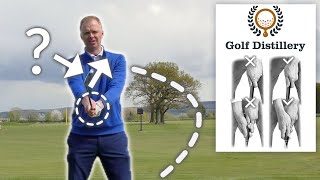
In Golf Distillery's How to Fix your Slice with your Grip, move the lead hand from weak toward neutral or slightly stronger, match the trail hand so both 'V's agree, then make slow half swings and confirm the face can return square without a last-second flip. Kerrod Gray Golf's grip drill works the same way, with two to three knuckles showing, waist-high rehearsals and soft punch shots before full swings. Change one checkpoint, test the flight, and stop when the curve settles.
- 4
If the face is closed, soften a strong grip toward neutral
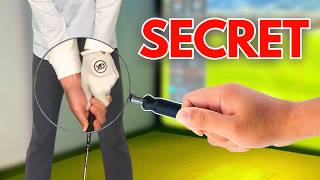
Harry Shaw Golf's Managing a Strong Grip: Neutralize and Rotate routine reduces the visible lead-hand knuckles by one checkpoint, then uses half swings with body rotation, not hand roll, controlling the face. If the ball still starts left too early, neutralize the trail hand further. Golf Distillery's Hooking - Is your Grip Causing your Golf Hooks? adds slow waist-high swings to see whether the face is rolling closed too early. Build back to full speed only once the face stops racing shut at half speed.
- 5
Make the trail hand agree with the lead hand
Both hands should work as one unit, with the two 'V's roughly parallel. Set the lead hand first, then place the trail hand so it supports a square face instead of holding it open, as in The Art of Simple Golf's Grip and Clubface Check. Make slow rehearsals where the face squares on its own, and confirm it with short shots before going back to full speed.
- 6
Rebuild the grip before every shot
A new grip will feel uncomfortable for a while, so don't trust what feels natural. Kerrod Gray Golf's advice is to reset the grip before every shot, and the 45-degree check from step one makes that quick. Start each session with punch shots to confirm the face is behaving, and check your hands again whenever the old miss reappears.
The best drills for this fault
Start with the first drill and move down the list if it doesn't fit your swing. Each drill page has step-by-step instructions and the coach's video.
 1
Neutral Grip Trainer
by Danny Maude
 2
How to Fix your Slice with your Grip (Too Weak or Too Strong?)
by Golf Distillery
 3
Hooking - Is your Grip Causing your Golf Hooks?
by Golf Distillery
 4
Managing a Strong Grip: Neutralize and Rotate
by Harry Shaw Golf
 5
Strengthen a Weak Grip Drill
by Kerrod Gray Golf
 6
Grip and Clubface Check
by The Art of Simple Golf
Training aids that help
Optional. Every drill above works with a club and an alignment stick - these just make the feedback harder to ignore.
Molded Grip Trainer
A snap-on rubber grip that forces your fingers into the perfect neutral position. The fastest way to fix a weak slice grip or a strong hook grip.
View on AmazonGolf Grip Training Glove
Training glove with placement markings to standardize lead-hand position and reduce grip drift between reps.
View on AmazonEyeline Golf Speed Trap
A base plate with 4 velcro rods. It creates a physical 'gate' that forces you to swing in-to-out. If you come Over-the-Top (Slice), you hit the soft rods.
View on AmazonAs an Amazon Associate we earn from qualifying purchases.
Frequently asked questions
Should I use a strong grip?
Only if your ball flight says you need one. A stronger grip helps golfers whose face stays open through impact, which is why it is a common slice fix. For a golfer who already releases the club actively, the same grip adds hooks. Let the start line and curve decide, not a general rule.
How many knuckles should I see on my lead hand?
Two is the usual neutral reference, and many golfers who slice end up between two and three. Count them from your normal address position, since leaning over to look changes what you see, and adjust the number by what the ball does.
Will changing my grip fix my slice?
It will if the open face is the main problem. If your slices start left before curving right, your path is cutting across the ball too, and a stronger grip on its own can turn the slice into a pull. In that case, work on the over-the-top move alongside the grip.
Does grip pressure matter as much as hand position?
Hand position sets where the face points; pressure affects how freely the wrists hinge and release. Squeezing hard tends to slow the release and leave the face open, and pressure usually creeps up when you are nervous. Hold firmly enough to control the club and lightly enough that the wrists can still hinge.
Overlapping, interlocking or ten-finger: does it change the clubface?
Not much on its own. How the trail little finger connects is mostly about comfort and keeping the hands together. How far both hands are turned on the handle matters far more, so get the rotation right first and pick whichever connection feels most secure.
Going to the range to practice this drill?
Save your 1 Free AI Swing Analysis Credit now. We'll send your pass and our 2-minute camera setup checklist directly to your phone so you're ready when you step onto the mat.
Already have a swing video on this device? Analyze it now