How to Fix a Flying Trail Elbow
By Paul Harris · Swing Kinematics Lead · Updated
⚡ Quick Answer & Diagnosis
A flying trail elbow is the elbow lifting up and away from your side so it points behind you at the top. It is often set at address by the trail forearm rotating over the grip. It only needs fixing if it puts the club across the line, gets the elbow behind you in transition, or straightens early into impact. Fold it down, then keep it in front.
| Biomechanical Root Cause | Corrective Action & Fix |
|---|---|
| The trail forearm is rotated over the grip at addressMany flying elbows are set before the club moves. When the trail forearm is rotated in over the grip at address, the elbow is pointed out, and as the arms swing back it has nowhere to go but up and away. Pre-setting the forearm so it faces slightly outward lets the elbow fold down instead. | Pre-set the trail arm at addressDanny Maude's 'Always Start With Your Right Arm in This Position' drill begins at setup. Instead of rotating the trail forearm in over the grip, set it so it faces slightly outward, which he calls 'opening the door' with the elbow. Then rehearse the backswing as a simple dumbbell curl: the trail elbow stays stable and folds down toward the ground as the arm rotates back, rather than lifting up and behind you. |
| The arms swing away from the body turnIf the arms lift on their own rather than moving with the chest, the trail elbow separates from your side and drifts behind you. This loss of connection is one of the main ways the club gets across the line at the top. The elbow is a symptom of arms that are no longer working with the turn. | Fold the elbow down and check the topUse Rob Bluck's Flying Trail Elbow Drills. Let the trail arm hang naturally at address rather than tensed away from the body. Make slow-motion backswings, checking that the trail elbow folds down and stays pointed toward the trail hip and the ground. Pause at the top in the waiter-carrying-a-tray position, with the elbow close to your side. Repeat until the fold is automatic, then move to slow half swings and finally full speed. |
| Chasing a longer backswingGolfers trying to make the backswing longer or wider often let the trail elbow lift to get the hands higher. It adds length but not useful length: the club overshoots the top, points across the line, and the downswing has to reroute it. A folded elbow puts a natural limit on how far the arms travel. | Fold the elbow down and check the topUse Rob Bluck's Flying Trail Elbow Drills. Let the trail arm hang naturally at address rather than tensed away from the body. Make slow-motion backswings, checking that the trail elbow folds down and stays pointed toward the trail hip and the ground. Pause at the top in the waiter-carrying-a-tray position, with the elbow close to your side. Repeat until the fold is automatic, then move to slow half swings and finally full speed. |
| The elbow stays behind the body in transitionThis is where a flying elbow actually costs you. If the trail elbow is still pointing behind your torso as the downswing starts, the shaft steepens and pitches out in front, and the club comes down over the top. Getting the elbow back in front of the body in transition matters more than where it was at the top. | Get the elbow in front in transitionJChownGolf's Trail Elbow in Front drill works on the moment that matters most. Place a soft training ball between your forearms and keep it trapped through the downswing and impact; if it drops, your trail elbow has moved behind your torso and steepened the shaft. To exaggerate the feel, make a few rehearsals using the lead hand to pull the club down while the trail elbow is pushed in front of your body. |
| The trail arm straightens too early in the downswingA trail arm that throws out straight on the way down releases the club early, and the low point of the swing moves back behind the ball. The result is fat and thin strikes and weak compression. At impact the trail elbow should still be flexed, at or a little past the trail hip, with the handle leading. | Deliver with the trail elbow at your hipAdam Bazalgette's Right Elbow in Golf Downswing drill trains the impact end. Take your impact position against something solid, such as an alignment rod, a bucket of balls or a door jamb, and push into it with the trail elbow up to or a little past the trail hip and the trail wrist still bent. Then hit small hip-high shots with the same forward pressure on the handle, ball first and then turf. Do not just pin the trail arm to your side: the goal is pressure into the ball, not a stuck elbow. |
A flying trail elbow is easy to see on video. At the top of the backswing the trail elbow has lifted up and away from your side and points out behind you instead of down toward the ground. The arms have drifted away from the body, and the club often points across the line.
It is also easy to over-diagnose. Several great players have swung with a flying elbow, because they got it back in front of the body in transition and delivered the club well. The elbow at the top is a contributor; what decides whether it hurts you is what happens next. If it stays behind you as the downswing starts, the shaft steepens and the club gets thrown out. If the trail arm straightens early, you get fat and thin strikes. If neither happens, you may not need to change it.
So check the delivery before you rebuild the backswing. A down-the-line video, or an AI swing analysis, shows whether your elbow returns in front of you in transition and where it sits at impact. Directions below are for right-handed golfers; left-handers reverse them.
Why it happens
The trail forearm is rotated over the grip at address
Many flying elbows are set before the club moves. When the trail forearm is rotated in over the grip at address, the elbow is pointed out, and as the arms swing back it has nowhere to go but up and away. Pre-setting the forearm so it faces slightly outward lets the elbow fold down instead.
The arms swing away from the body turn
If the arms lift on their own rather than moving with the chest, the trail elbow separates from your side and drifts behind you. This loss of connection is one of the main ways the club gets across the line at the top. The elbow is a symptom of arms that are no longer working with the turn.
Chasing a longer backswing
Golfers trying to make the backswing longer or wider often let the trail elbow lift to get the hands higher. It adds length but not useful length: the club overshoots the top, points across the line, and the downswing has to reroute it. A folded elbow puts a natural limit on how far the arms travel.
The elbow stays behind the body in transition
This is where a flying elbow actually costs you. If the trail elbow is still pointing behind your torso as the downswing starts, the shaft steepens and pitches out in front, and the club comes down over the top. Getting the elbow back in front of the body in transition matters more than where it was at the top.
The trail arm straightens too early in the downswing
A trail arm that throws out straight on the way down releases the club early, and the low point of the swing moves back behind the ball. The result is fat and thin strikes and weak compression. At impact the trail elbow should still be flexed, at or a little past the trail hip, with the handle leading.
How to fix it, step by step
- 1
Check the delivery before the backswing
Film down the line and pause at three points: the top, halfway down, and impact. At the top, note where the elbow points. Halfway down, check whether the elbow has returned in front of your torso. At impact, check whether the trail arm is still flexed. If the elbow flies at the top but returns in front and your strike is solid, leave it. If it stays behind you, or the arm straightens early, keep going.
- 2
Pre-set the trail arm at address
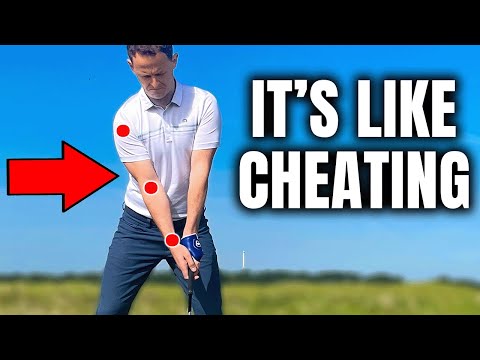
Danny Maude's 'Always Start With Your Right Arm in This Position' drill begins at setup. Instead of rotating the trail forearm in over the grip, set it so it faces slightly outward, which he calls 'opening the door' with the elbow. Then rehearse the backswing as a simple dumbbell curl: the trail elbow stays stable and folds down toward the ground as the arm rotates back, rather than lifting up and behind you.
- 3
Fold the elbow down and check the top
Use Rob Bluck's Flying Trail Elbow Drills. Let the trail arm hang naturally at address rather than tensed away from the body. Make slow-motion backswings, checking that the trail elbow folds down and stays pointed toward the trail hip and the ground. Pause at the top in the waiter-carrying-a-tray position, with the elbow close to your side. Repeat until the fold is automatic, then move to slow half swings and finally full speed.
- 4
Get the elbow in front in transition
JChownGolf's Trail Elbow in Front drill works on the moment that matters most. Place a soft training ball between your forearms and keep it trapped through the downswing and impact; if it drops, your trail elbow has moved behind your torso and steepened the shaft. To exaggerate the feel, make a few rehearsals using the lead hand to pull the club down while the trail elbow is pushed in front of your body.
- 5
Deliver with the trail elbow at your hip
Adam Bazalgette's Right Elbow in Golf Downswing drill trains the impact end. Take your impact position against something solid, such as an alignment rod, a bucket of balls or a door jamb, and push into it with the trail elbow up to or a little past the trail hip and the trail wrist still bent. Then hit small hip-high shots with the same forward pressure on the handle, ball first and then turf. Do not just pin the trail arm to your side: the goal is pressure into the ball, not a stuck elbow.
- 6
Build speed in stages
Go from half swings to three-quarter swings to full swings, filming the halfway-down position as you go. A folded elbow at the top usually holds before an in-front elbow in transition does. If the elbow drifts behind you again at full speed, drop back to the ball-between-the-forearms drill before moving up.
The best drills for this fault
Start with the first drill and move down the list if it doesn't fit your swing. Each drill page has step-by-step instructions and the coach's video.


Training aids that help
Optional. Every drill above works with a club and an alignment stick - these just make the feedback harder to ignore.
Precision Impact Trainer
A wrist cuff that locks in the correct impact position. It physically prevents you from breaking your wrists, forcing body rotation through the shot.
View on AmazonSure-Set Golf Training Aid
Foldable backswing trainer that gives a fixed arm-and-shaft checkpoint to reduce overrun at the top.
View on AmazonGolf Wrist Hinge Trainer
A wearable brace that clicks or restricts movement if you break your wrists too early. Excellent for curing the 'Flip' or 'Scoop' at impact.
View on AmazonAs an Amazon Associate we earn from qualifying purchases.
Frequently asked questions
Is a flying trail elbow always a fault?
No. Plenty of good players have swung with a flying elbow at the top and still delivered the club well, because their elbow returned in front of the body in transition. The position at the top is far less important than what the elbow does on the way down. Fix it if it is causing a steep, over-the-top move or early straightening, not because it looks different.
Should I hold a towel under my trail arm to keep the elbow in?
Be careful with that. Pinning the trail arm against your side tends to shorten and flatten the swing, and in the downswing it can leave the arm stuck rather than delivering pressure into the ball. A soft ball between the forearms gives you feedback on the elbow position without clamping the arm to your body.
What is the difference between a flying elbow and a chicken wing?
They are different arms at different moments. A flying elbow is the trail elbow pointing out behind you at the top of the backswing. A chicken wing is the lead elbow bending and pulling in through impact. A golfer can have one without the other, and they need different fixes.
Does a flying trail elbow cause a slice?
It can contribute. If the elbow stays behind your torso as the downswing starts, the shaft steepens and the club tends to come over the top, which is a common route to a pull or a slice. But the slice comes from the transition, not the top position, so the transition drill is where to spend your time.
Going to the range to practice this drill?
Save your 1 Free AI Swing Analysis Credit now. We'll send your pass and our 2-minute camera setup checklist directly to your phone so you're ready when you step onto the mat.
Already have a swing video on this device? Analyze it now