Strong vs Weak Grip in Golf: Finding the Right Hand Position for Your Swing
Key takeaways
| Point | Details |
|---|---|
| Grip pressure is not grip strength | Always maintain soft, supple grip pressure (around 4 on a scale of 10) regardless of hand orientation. |
| Slicers should avoid weak grips | A weak grip requires violent manual forearm rotation through impact to square the face, leading to extreme inconsistency. |
Quick answer
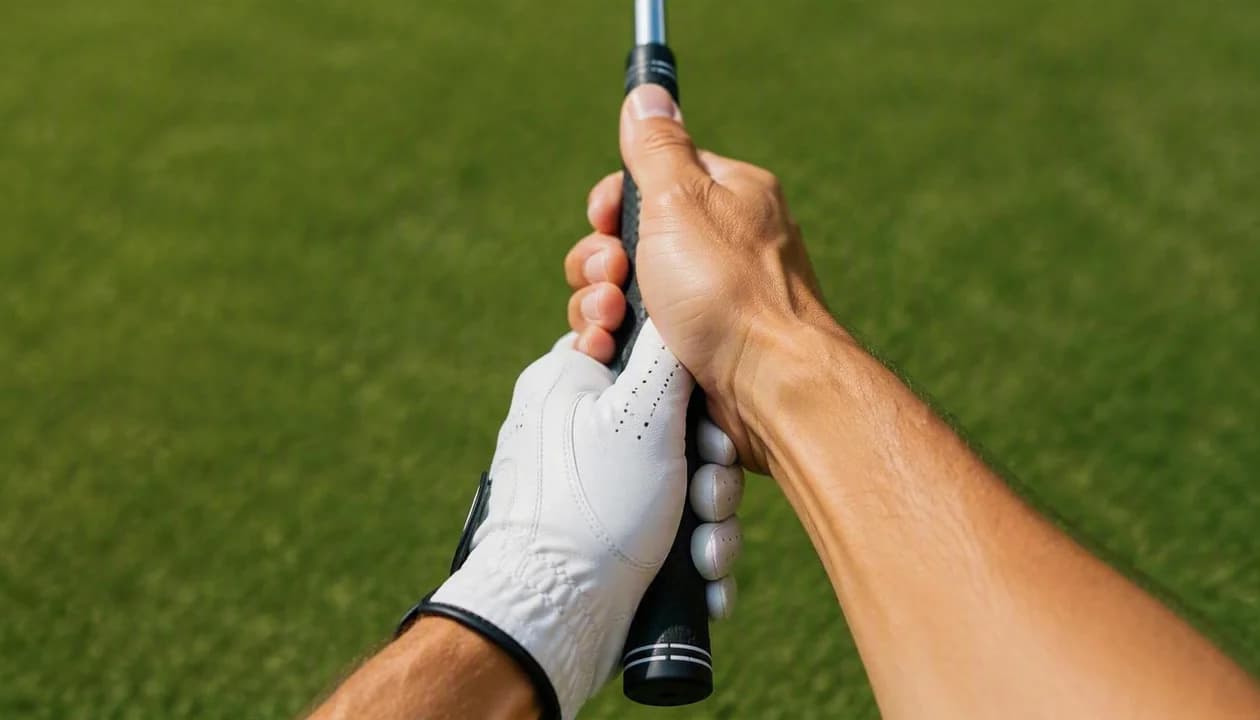
A strong golf grip means the hands are turned away from the target on the handle, showing three or more knuckles on the lead hand at address, promoting a closed clubface and draw flight. A weak grip turns the hands toward the target, showing one knuckle or none, promoting an open face and fade flight. Most amateur golfers fighting a slice benefit from a neutral to slightly strong grip.
In golf terminology, strong and weak have nothing to do with grip pressure. You should never squeeze the club like a vise. Strong and weak refer strictly to the rotational orientation of your hands relative to the center of the shaft.
Strong vs neutral vs weak grip comparison
| Grip Style | Lead Hand Checkpoint | Trail Hand Checkpoint | Typical Ball Flight | Tour Examples |
|---|---|---|---|---|
| Strong Grip | 3 to 3.5 knuckles visible | V-line points outside trail shoulder | Draw or hook, lower launch angle | Dustin Johnson, Zach Johnson, Paul Azinger |
| Neutral Grip | 2 to 2.5 knuckles visible | V-line points toward trail ear or collarbone | Straight to slight push-draw | Tiger Woods, Adam Scott, Rory McIlroy |
| Weak Grip | 1 knuckle visible | V-line points toward chin or lead shoulder | Fade or slice, higher launch angle | Collin Morikawa, Ben Hogan, Jordan Spieth |
Matching your grip to your body rotation
Grip style must match your body rotation speed. Players with aggressive hip rotation like Dustin Johnson often need a strong grip with a bowed lead wrist because their fast hip clearing leaves the hands behind. If a golfer with slow hip rotation plays a strong grip, they will hit vicious pull-hooks.
Grip and face-control drills
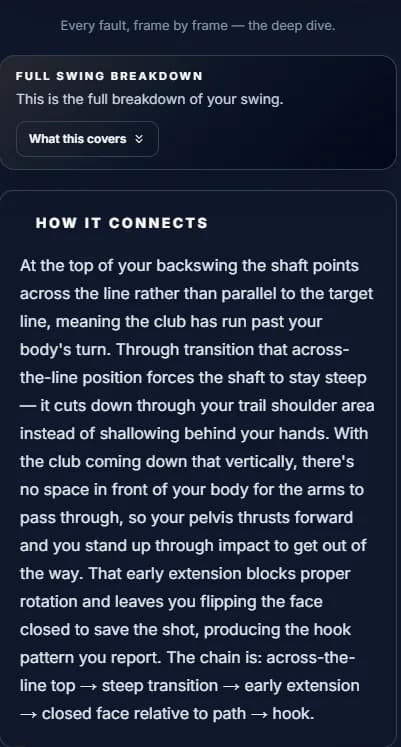
Train your hands to square the face naturally with these two core release drills.

Related shot control guides
Frequently asked questions
Can changing my grip fix my slice immediately?
Moving from a weak grip to a neutral or slightly strong grip often squares the face immediately, eliminating up to half of your slice curve on day one.
How do I know if my grip is too strong?
If your typical miss is a low pull-hook that starts left and curves further left into the rough, your grip may be overly strong for your hip rotation rate.
How AI Golf School Diagnoses Your Swing
Instead of a vague list of swing tips, every analysis isolates your single root-cause fault, tracks 33 skeletal joints in 3D through impact, and pairs you with a focused drill plan.
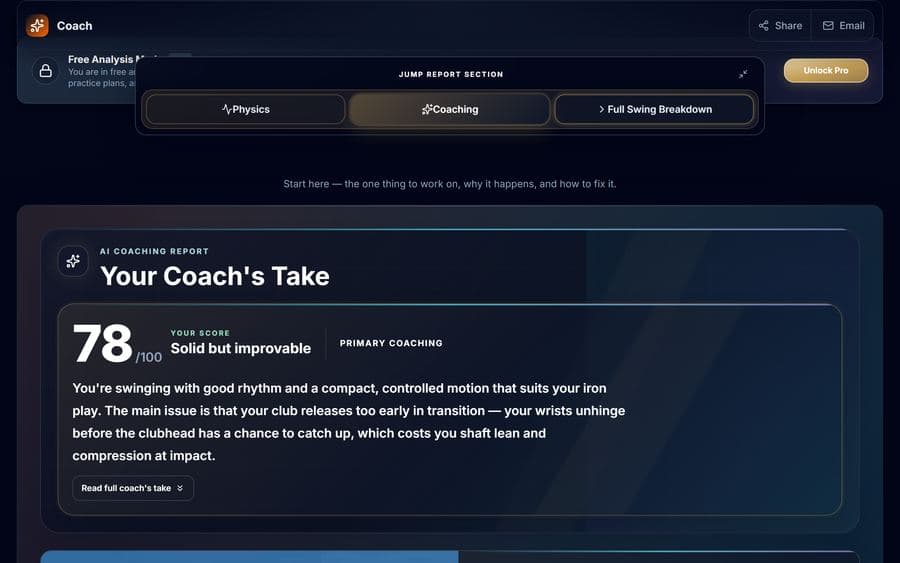
Composite score with root-cause flaw detection and severity ratings.
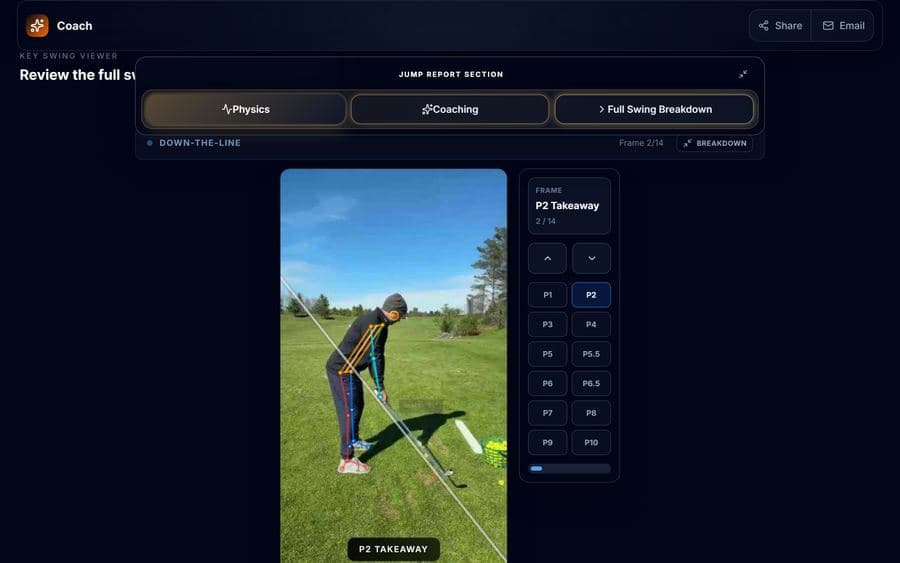
Swing Lens tracks 33 joints across all swing phases.
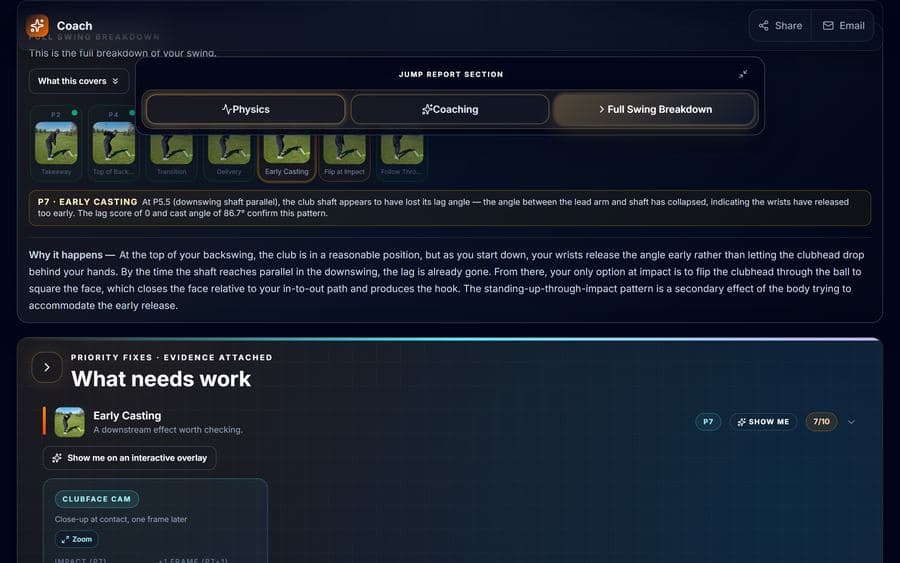
Personalized drills from certified coaches matched to your specific flaws.
Upload one video from your phone to diagnose your swing mechanics.