How to Fix a Chicken Wing in Your Golf Swing: Biomechanics and Drills

Quick answer
A chicken wing occurs when the lead elbow bends and pulls outward through impact instead of extending into a natural release. It is usually caused by an open clubface or stalled hip rotation forcing the golfer to pull the handle upward to avoid digging into the ground. Fixing it requires rotating your chest through impact and squaring the clubface earlier.
Golfers spend months trying to keep their lead arm straight through impact by sheer willpower, only to find the elbow bending anyway. That is because the chicken wing is an involuntary reflex. Your brain realizes at P6 (club shaft parallel to the ground) that if your arm extends normally, the open clubface will send the ball forty yards right, or the clubhead will dig straight into the dirt.
The two primary causes of a chicken wing
- 1
Compensating for an open clubface
If your clubface is wide open in the downswing, extending your arms would produce a violent push-slice. The brain pulls the lead elbow up and back across the chest to physically hold the clubface square to the target line.
- 2
Stalled pelvic rotation and loss of space
When the hips stop rotating toward the target before impact, the hands run out of room. The lead arm has nowhere to go except bending outward like a chicken wing to clear the torso.
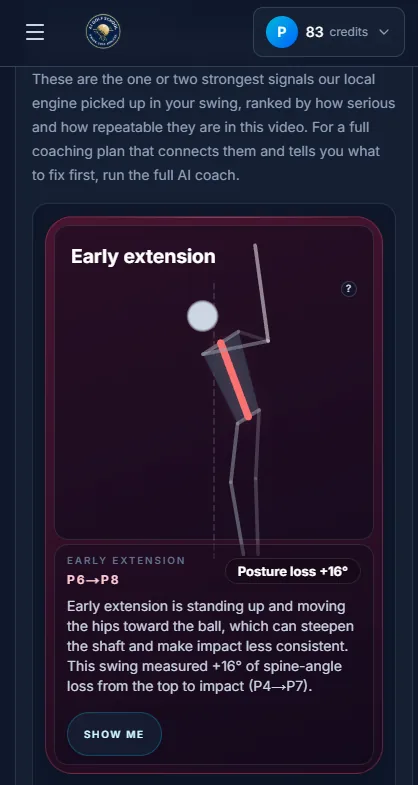
How to diagnose your chicken wing on video
Record a down-the-line and face-on swing video from your phone. In AI Golf School, look at your position at P7 (impact) and P8 (both arms parallel to the ground on the follow-through). In an efficient swing, the lead arm remains elongated while the forearm rotates naturally into supination. If your lead elbow points toward the target or the sky at P8, you have a chicken wing.
Top drills to cure the chicken wing
Use these drills to teach your body proper transition shallowing and lead arm extension.


Related fault guides
Key takeaways
| Point | Details |
|---|---|
| Chicken wings are compensations, not root causes | Attempting to lock the lead arm straight without fixing face angle or hip rotation will cause heel strikes or shanks. |
| Forearm rotation squares the clubface | Proper lead forearm supination allows both arms to extend naturally without tension through the hitting zone. |
Frequently asked questions
Does a chicken wing cause loss of distance?
Yes. A bent lead elbow shortens your swing arc radius, decreases smash factor, and reduces clubhead speed by 5 to 10 mph through impact.
How do I fix a chicken wing with my driver?
Ensure your lead shoulder tilts slightly upward at address, keep your hips clearing through impact, and focus on releasing the toe of the clubhead past the heel through the ball.
How AI Golf School Diagnoses Your Swing
Instead of a vague list of swing tips, every analysis isolates your single root-cause fault, tracks 33 skeletal joints in 3D through impact, and pairs you with a focused drill plan.
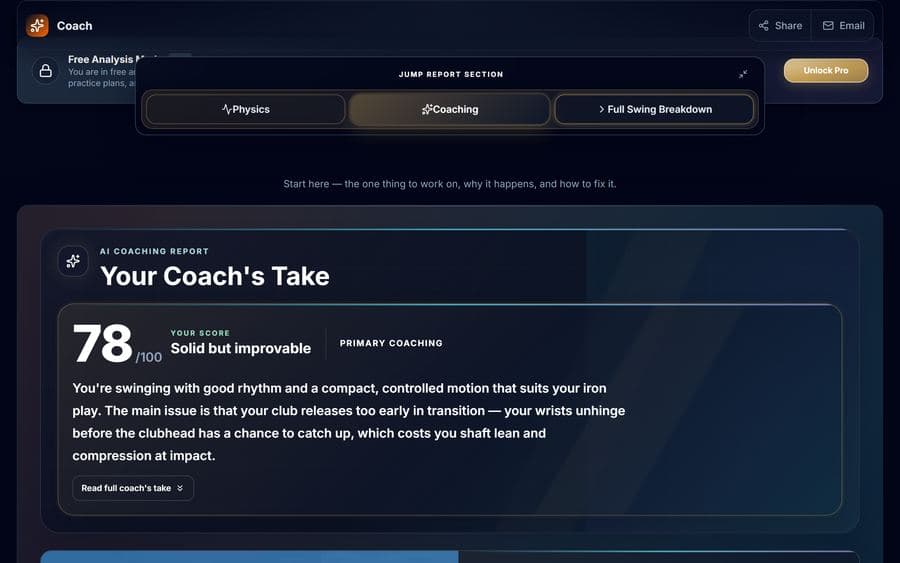
Composite score with root-cause flaw detection and severity ratings.
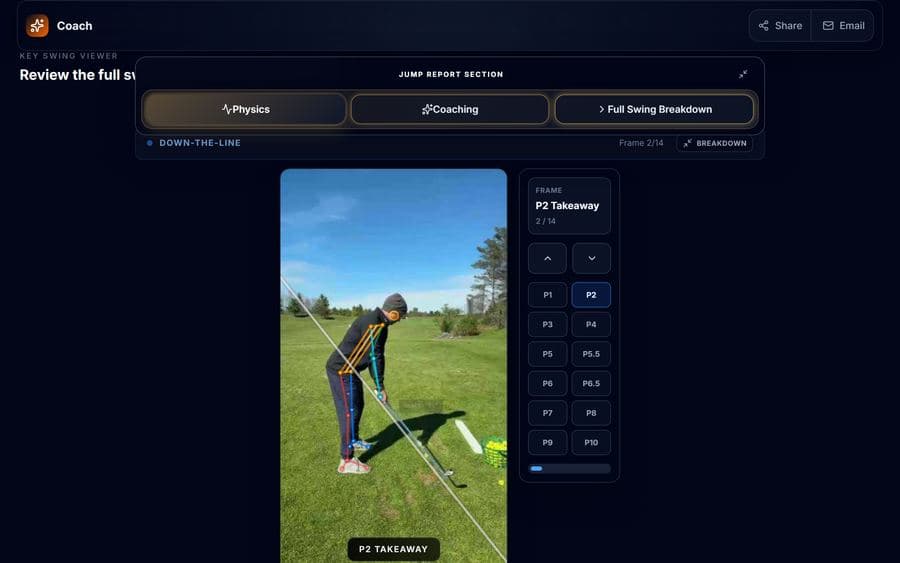
The Oracle physics engine tracks 33 joints across all swing phases.
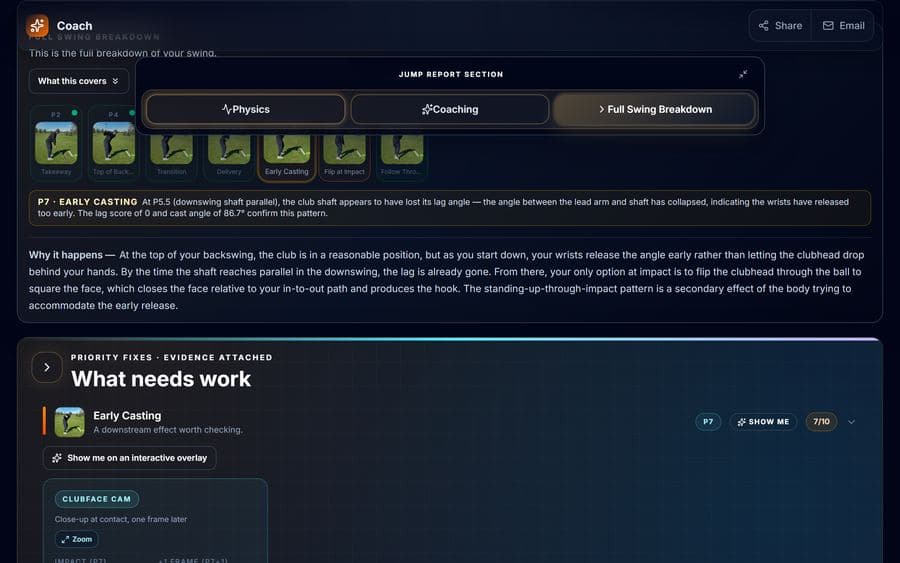
Personalized drills from certified coaches matched to your specific flaws.
Upload one video from your phone to diagnose your swing mechanics.