How to Stop Hitting Fat Shots: Mastering Low Point and Weight Shift

Key takeaways
| Point | Details |
|---|---|
| A fat shot means your swing arc bottomed out too early | The lowest point of the swing arc should occur 2 to 4 inches in front of the golf ball, not behind it. |
| Hanging back on the trail foot is the leading cause | Failing to transfer 70 to 80 percent of your body pressure onto the lead foot by impact keeps the low point behind the ball. |
| Ball-first contact requires forward handle lean | Hands positioned ahead of the clubhead naturally ensure the leading edge strikes the ball before contacting the ground. |
Quick answer
A fat shot (hitting the big ball before the little ball) occurs when the bottom of your swing arc falls behind the golf ball instead of 2 to 4 inches in front of it. To stop hitting fat shots, transfer 75 percent of your pressure onto your lead foot before impact, keep your chest centered over the ball, and avoid hanging back on your trail leg.
Few sensations in golf are more jarring than swinging with full commitment only to have the club dig a thick trench of mud two inches behind the ball. The ball squirts forward forty yards, your wrists sting from the impact shock, and a pristine turf toupee flies farther than your shot.
Amateur golfers often view fat shots and thin shots as opposite problems. In reality, they are twins born from the exact same flaw: an early low point. When your swing bottoms out behind the ball, you either dig into the dirt (a fat shot) or catch the ball with the leading edge on the upswing (a thin shot).
The physics of swing low point control
Every golf swing forms a circle in space. The lowest point of that circular arc is dictated almost entirely by the position of your sternum and your pelvic center at impact.
Tour pros position their sternum roughly 1 to 2 inches ahead of the ball at impact, with their hips shifted 3 to 5 inches toward the target. This ensures the club strikes the ball first while still descending, carving a divot that starts on the target side of the tee peg.
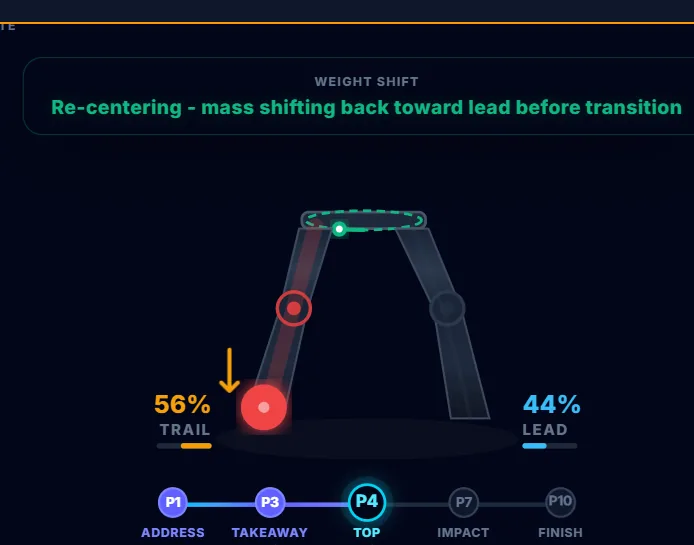
| Biomechanical Factor | Tour Delivery | Fat Chunk Amateur | Strike Mechanism |
|---|---|---|---|
| Lead Side Pressure at Strike | 75% to 85% forward | 40% to 50% (hanging back) | Drops swing arc bottom behind ball |
| Sternum Position at Impact | 1 to 2 inches ahead of ball | 2 to 4 inches behind ball | Shifts circular swing hub backward |
| Trail Wrist Extension Retention | Maintains 20° to 30° bend | Straightens early (scoop release) | Throws clubhead downward into turf |
| Divot Start Location | Begins 1 inch in front of ball | Begins 1 to 3 inches behind ball | Club decelerates in turf prior to ball strike |
Essential drills to stop hitting fat shots
These classic low-point feedback drills immediately train you to strike the ball before the turf.
Proven low-point control drills
Practice these drills with an alignment stick and towel to build clean, ball-first contact.

Read the comprehensive fault guide
Related swing fault guides
Dive deeper into ground contact and weight transfer mechanics.
Frequently asked questions
Why do I hit irons fat but hit driver well?
The driver is teed up and designed to be struck on an upward angle of attack with weight slightly back. If you take that same hanging-back movement into your iron swing, the club bottoms out early into the ground, producing heavy turf contact.
Should I try to lift my head up to avoid hitting the ground?
No. Trying to avoid the ground by lifting your head or standing up mid-swing causes severe topping or erratic thinned shots. Focus on moving your weight forward onto your lead heel so the bottom of your arc naturally shifts ahead of the ball.
Sources
- TrackMan Iron Impact Geometry and Low Point Studies Measurements of low point distance ahead of the golf ball.
- PGA Teaching Manual: Turf Interaction and Divot Patterns Divot depth, entry point, and low point control.
How AI Golf School Diagnoses Your Swing
Instead of a vague list of swing tips, every analysis isolates your single root-cause fault, tracks 33 skeletal joints in 3D through impact, and pairs you with a focused drill plan.
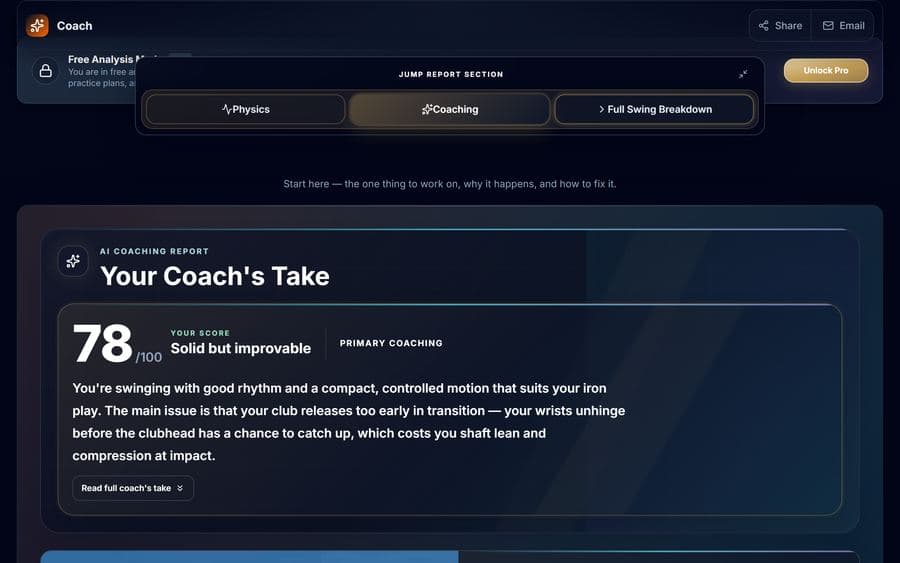
Composite score with root-cause flaw detection and severity ratings.
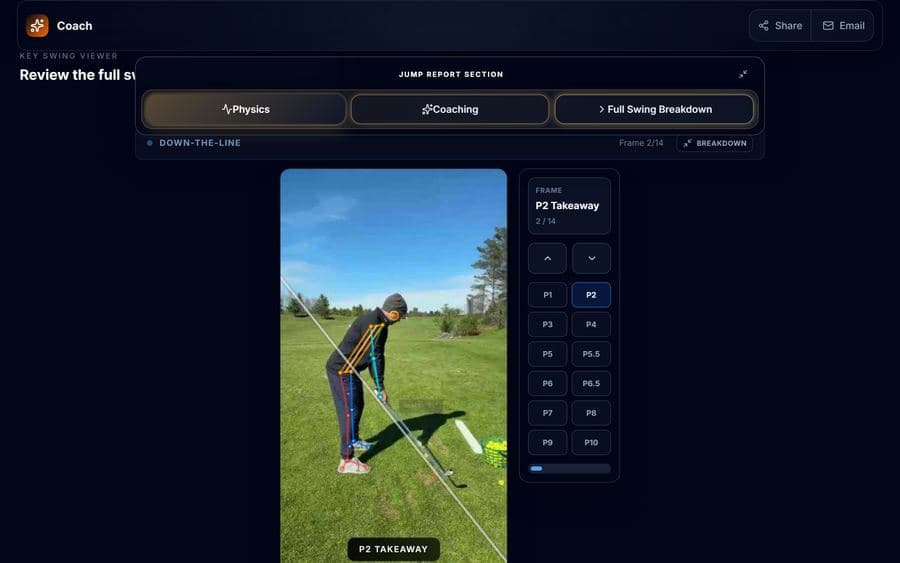
Swing Lens tracks 33 joints across all swing phases.
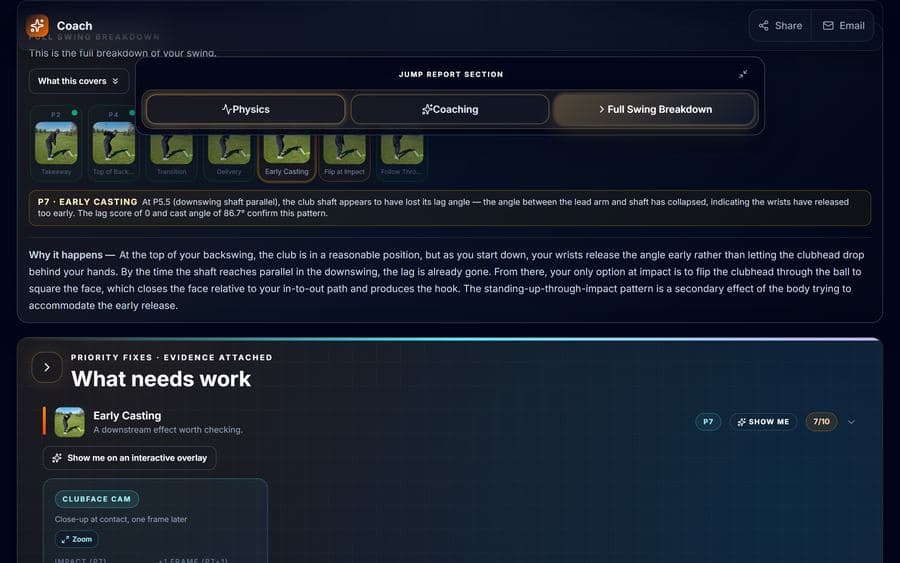
Personalized drills from certified coaches matched to your specific flaws.
Upload one video from your phone to diagnose your swing mechanics.