Early Extension in Golf: Why Your Hips Thrust and How to Stay in Posture

Key takeaways
| Point | Details |
|---|---|
| Early extension is a survival reflex | Your brain thrusts the hips to prevent an open or steep clubhead from digging a trench in the turf. |
| Lead hip clears back: trail hip does not push forward | Focus on pushing your lead pocket behind you into transition to maintain your setup spine angle. |
Quick answer
Early extension is the forward thrust of the pelvis toward the golf ball during the downswing, causing the spine to straighten up prematurely. It is usually caused by an open clubface, an overly steep club shaft, or poor hip mobility forcing the body to make room for the arms. Fixing it requires shallowing the shaft early and rotating the lead hip back and away from the ball line.
Few swing flaws are as destructive as early extension. When your pelvis moves two to four inches toward the ball at P6, the distance between your chest and the ground shrinks, and your hands run out of space. To avoid driving the clubhead into the turf, your body stands up, loses posture, and flips the wrists through impact, leading to thin shots, fat shots, and blocks.
Why golfers thrust their hips forward
- 1
Steep shaft angle requires standing up
If the club shaft is steep and vertical at P5, continuing downward in posture would cause the club to crash violently into the ground several inches behind the ball. The brain thrusts the pelvis forward to raise the handle and save the contact.
- 2
Trail hip pushing forward instead of lead hip clearing back
In a great swing, the lead hip pushes backward away from the target line. In early extension, the trail hip thrusts toward the ball like a soccer kick, crowding the swing arc.
- 3
Lack of pelvic rotation at setup
Setting up with poor pelvic tilt or rounded lower back limits internal hip rotation, forcing the hips to jump forward rather than turning.
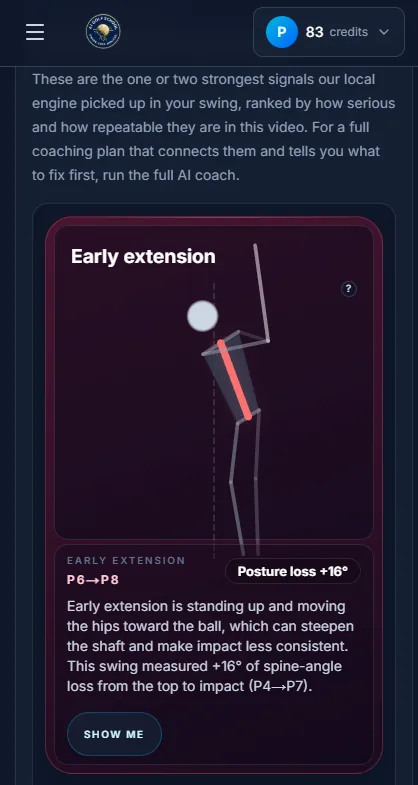
| Biomechanics Metric | Tour Pelvic Delivery | Early Extension Amateur | Impact Consequence |
|---|---|---|---|
| Pelvis Forward Thrust to Ball | 0.0 to 0.5 inches (holds tush line) | 2.0 to 4.5 inches forward thrust | Loss of room for hands to pass |
| Spine Angle Loss (P1 to P7) | Maintains setup posture (±2°) | Spine stands vertical by 10° to 18° | Chest rises, forces arm scoop |
| Lead Hip Clearance at Impact | Clears 2 to 3 inches deeper than setup | Hips jam forward toward target line | Rotation stalls, causing blocks/hooks |
| Delivery Wrist Dynamics | Bowed lead wrist, forward lean | Emergency cupping/flip release | High weak flight or toe mishits |
Best drills to eliminate early extension
These two wall-based feedback drills teach your hips to stay deep through the hitting zone.


Related swing fault guides
Frequently asked questions
Does early extension cause shank shots?
Yes. Thrusting the pelvis forward moves the hands and clubhead closer to the ball, presenting the hosel to the ball at impact.
Can hip mobility exercises fix early extension?
Improving trail hip internal rotation and lead hip external rotation helps, but combining mobility with shaft shallowing drills produces the fastest on-course results.
How AI Golf School Diagnoses Your Swing
Instead of a vague list of swing tips, every analysis isolates your single root-cause fault, tracks 33 skeletal joints in 3D through impact, and pairs you with a focused drill plan.
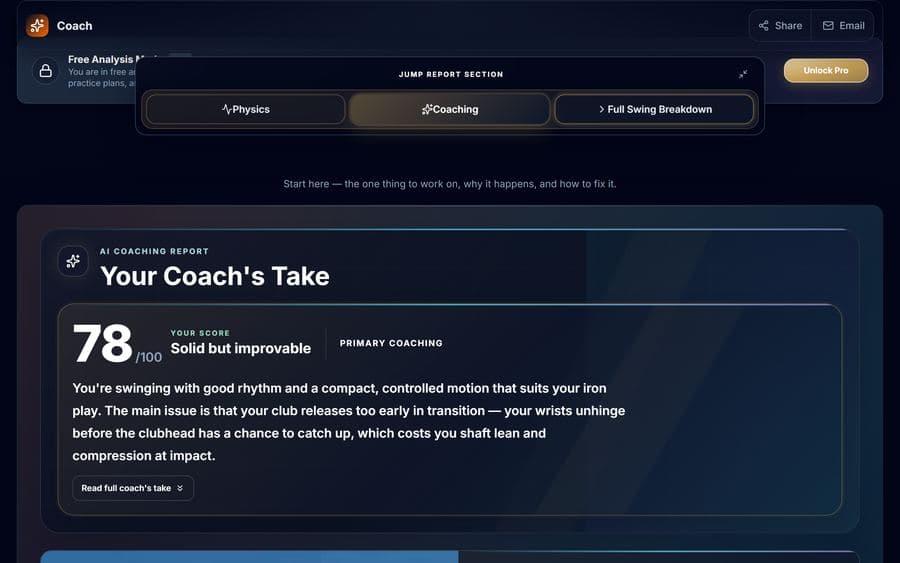
Composite score with root-cause flaw detection and severity ratings.
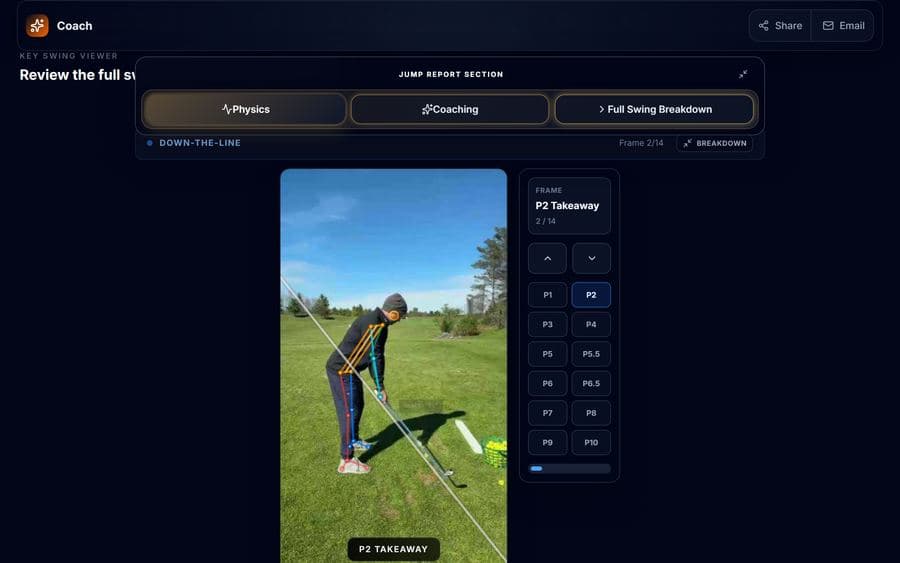
The Oracle physics engine tracks 33 joints across all swing phases.
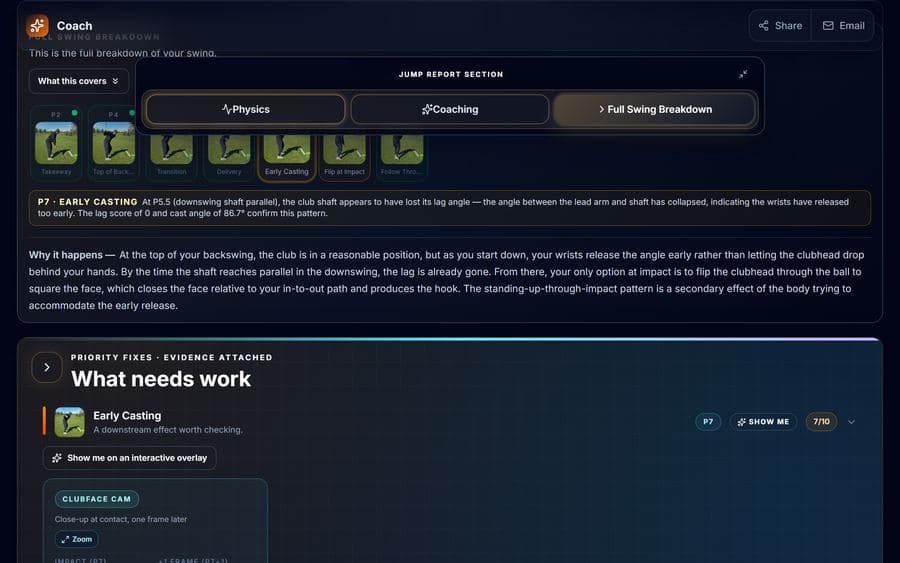
Personalized drills from certified coaches matched to your specific flaws.
Upload one video from your phone to diagnose your swing mechanics.