Kinematic Sequence in Golf: How Tour Pros Sequence Downswing Power

Key takeaways
| Point | Details |
|---|---|
| Sequence beats effort every time | Accelerating body segments in the wrong order leaks energy and ruins club face control. |
| Deceleration creates the whip | The lower body must post and brake to fling the arms and clubhead through impact at peak speed. |
Quick answer
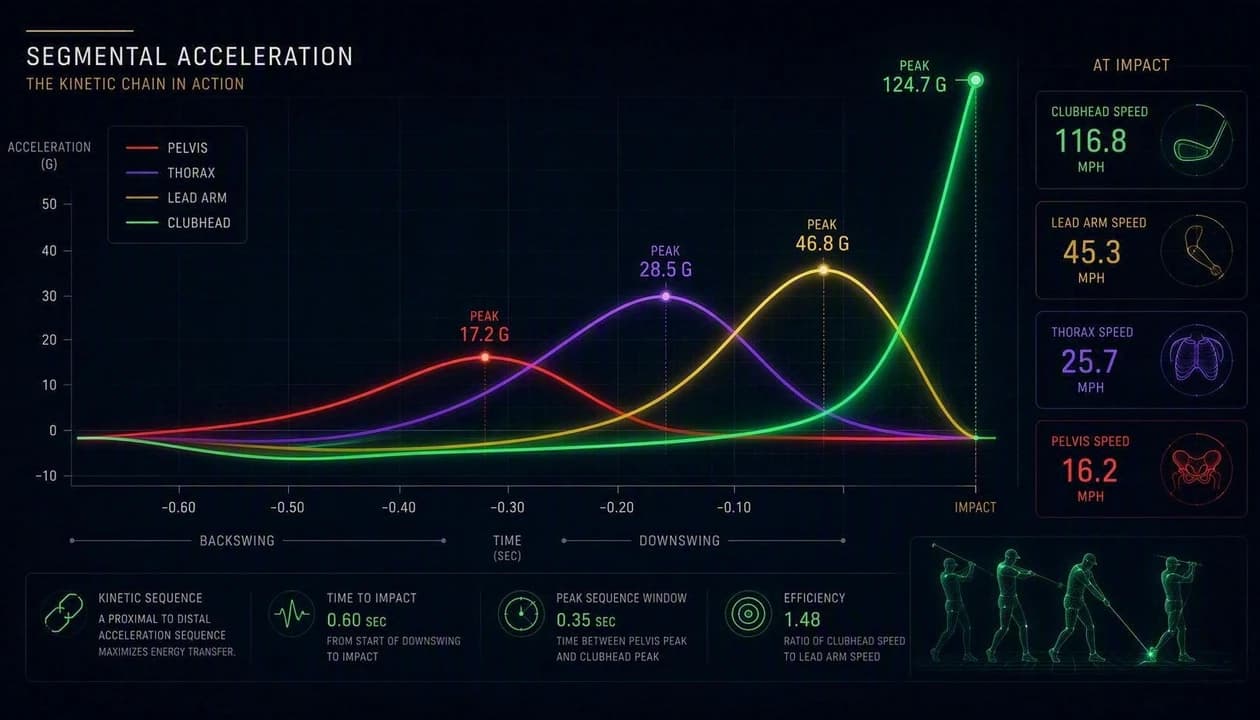
The kinematic sequence is the chronological order in which body segments accelerate and decelerate during the downswing: pelvis first, thorax (chest) second, arms third, and clubhead fourth. Each segment transfers energy to the next segment as it brakes, acting like a whip to maximize clubhead speed at impact.
Watch Rory McIlroy swing in slow motion and his motion looks relaxed and fluid, yet his clubhead travels at 122 mph. Watch a 20-handicapper swing and they appear to exert maximum physical effort, yet their driver tops out at 88 mph. The difference is not brute strength: it is kinematic sequencing.
The 4 stages of downswing acceleration
| Sequence Stage | Body Segment | Peak Acceleration Role | Braking Action |
|---|---|---|---|
| 1. Pelvis (Hips) | Pelvic girdle and lower torso | Initiates transition toward target | Brakes against stable lead leg to transfer energy upward |
| 2. Thorax (Chest) | Ribcage and shoulders | Accelerates rotational coil | Decelerates as arms pass chest level |
| 3. Arms | Lead and trail arms | Pulls handle into hitting zone | Decelerates prior to impact as wrists unhinge |
| 4. Clubhead | Shaft and clubhead | Releases stored lag energy | Peaks in speed precisely at impact point |
The whip principle: Why braking creates speed
Most amateur golfers believe speed requires accelerating everything all the way through the ball. But biomechanics shows that acceleration without deceleration bleeds power. When you snap a towel or crack a whip, your hand moves forward rapidly and then abruptly stops: that sudden stop is what causes the tip of the whip to break the sound barrier.
In the golf swing, when your lead hip posts up and firms against the ground at P6, its rotational speed slows down. That braking action flings your chest and arms forward with tremendous rotational torque.
Drills to master downswing sequence
Retrain your transition rhythm with these two specialized sequencing drills.


Related biomechanics guides
Frequently asked questions
Can I measure my kinematic sequence with AI Golf School?
Yes. The Oracle physics engine measures rotational velocities and timing gaps between your hips, chest, and arms from video, providing an objective sequence score.
What is the most common sequence flaw in amateurs?
The chest and arms accelerating before the pelvis initiates transition, which ruins the kinetic chain and creates an over-the-top swing path.
How AI Golf School Diagnoses Your Swing
Instead of a vague list of swing tips, every analysis isolates your single root-cause fault, tracks 33 skeletal joints in 3D through impact, and pairs you with a focused drill plan.
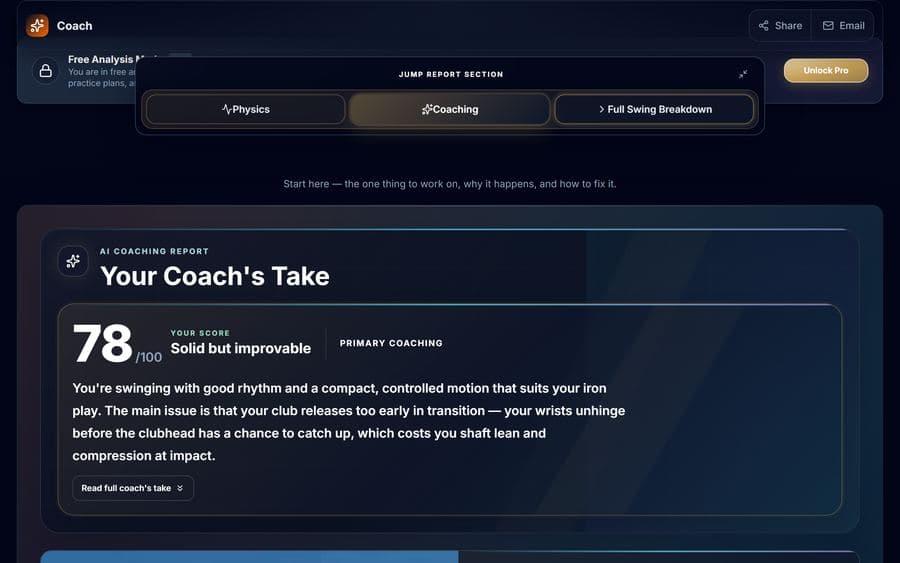
Composite score with root-cause flaw detection and severity ratings.
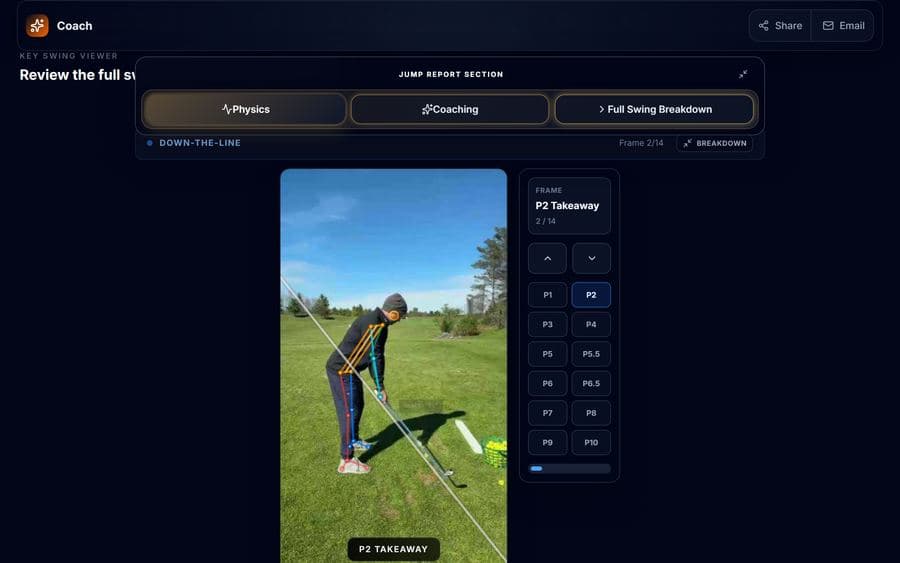
The Oracle physics engine tracks 33 joints across all swing phases.
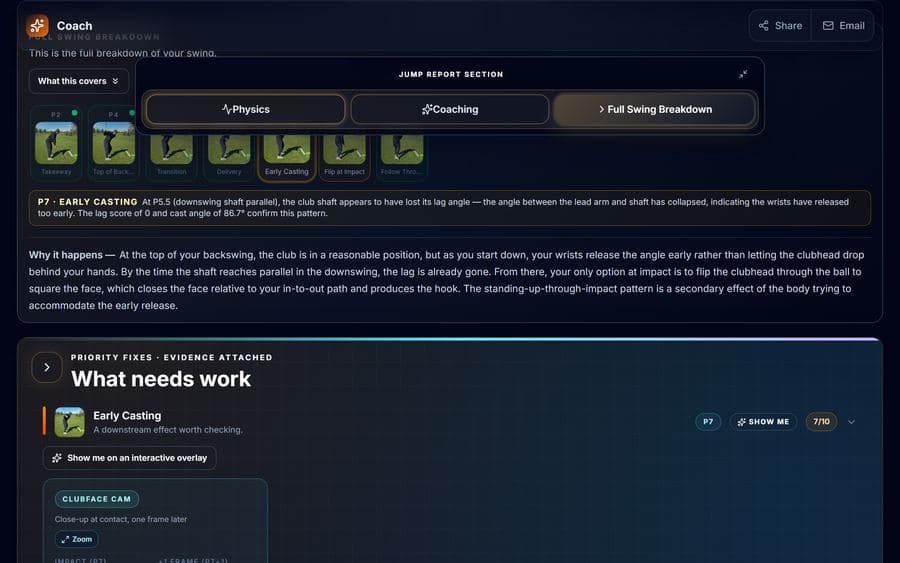
Personalized drills from certified coaches matched to your specific flaws.
Upload one video from your phone to diagnose your swing mechanics.