Over-the-Top Golf Swing: Biomechanical Causes and the Proven Fix

Key takeaways
| Point | Details |
|---|---|
| Sequence determines path | The lower body must begin shifting toward the target before the shoulders start unwinding. |
| Shallowing is a consequence of proper turn | Letting gravity drop the arms while keeping your back facing the target longer naturally squares the club path. |
Quick answer
An over-the-top swing occurs when the downswing begins with the upper body and shoulders rotating outward before the lower body can initiate transition. This throws the club outside the swing plane, forcing a steep, out-to-in path through impact. Fixing it requires delaying upper-body rotation and allowing the arms to drop into the slot while the hips shift toward the target.
More than 70 percent of golfers scoring above 85 fight an over-the-top path. It produces the classic two-way miss: a high, weak slice when the clubface is open to the path, or an aggressive pull-hook when the hands flip the face closed. Despite knowing they are over the top, most players fail to fix it because they treat the symptom with their hands instead of fixing transition sequencing.
The step-by-step breakdown of an over-the-top transition
- 1
Premature shoulder spin at P4
From the top of the backswing, the golfer fires the trail shoulder toward the ball. This immediately kicks the club shaft above the original shaft plane.
- 2
Steep delivery shaft angle at P6
As the hands reach waist height, the clubhead is positioned well outside the hand line rather than trailing behind the body.
- 3
Out-to-in swipe through impact at P7
Having approached from outside the target line, the club cuts violently across the ball from right to left (for right-handed golfers), shedding ball speed and imparting slicing sidespin.
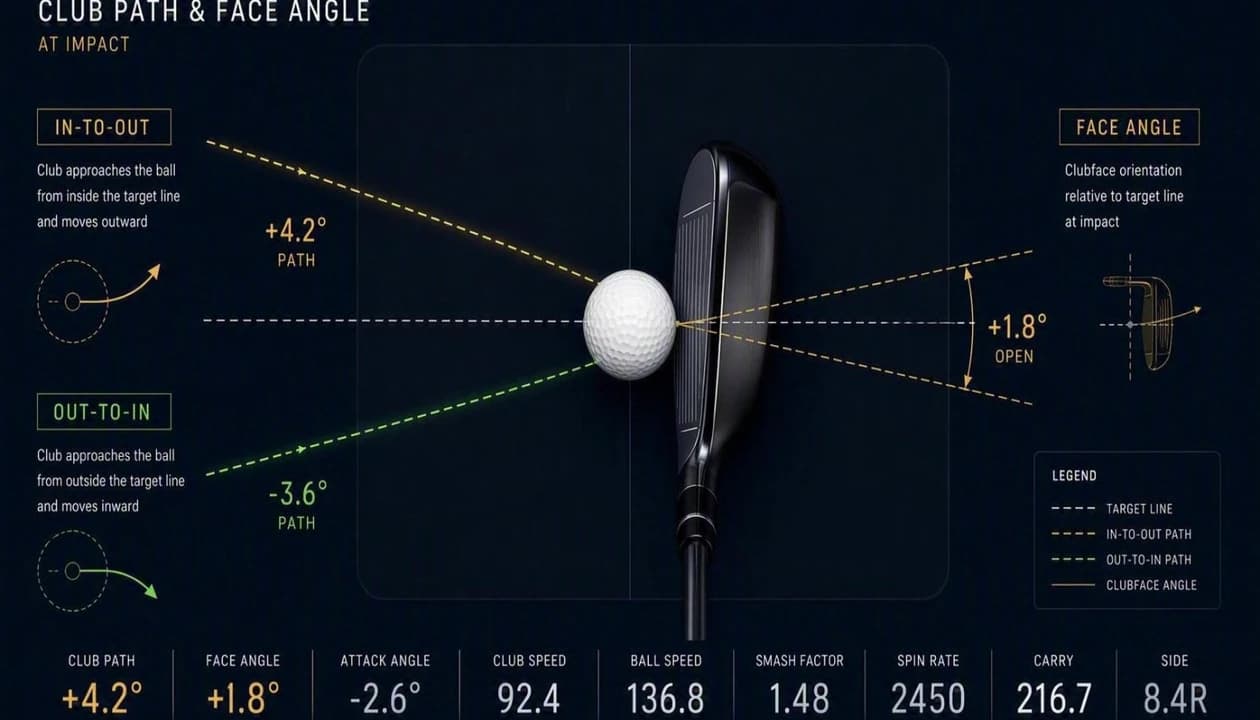
| Delivery Metric | Neutral Tour Delivery | Over-the-Top Amateur | Flight Ball Result |
|---|---|---|---|
| Horizontal Club Path | +2.0° to +4.0° (in-to-out) | -4.0° to -8.0° (out-to-in) | Glancing cross-face slice swipe |
| Face-to-Path Relationship | 1° to 2° closed to path | 4° to 8° open to path | Severe right-curving ball flight |
| Shoulder Plane at P5 | Closed to target line (10° to 15°) | Spun open to target (15° to 25°) | Pulls shaft above address plane |
| Shaft Angle bisect at P5 | Bisects trail bicep/forearm | Bisects neck or above shoulder | Steep chopping angle of attack |
Proven shallowing drills to eliminate over-the-top
These two drills train your arms to drop naturally into the slot while your lower body leads the forward swing.


Related swing fault guides
Frequently asked questions
Why do I swing over the top with my driver but not my short irons?
Drivers have longer shafts and flatter lie angles, making an over-the-top move much more pronounced. The ball is also positioned further forward, tempting players to lunge forward with their upper body.
What is the fastest drill to fix an over-the-top swing?
The Dropping Drill (Justin Rose feel) trains the arms to drop vertically while maintaining a closed shoulder line, instantly shallowing your approach path.
How AI Golf School Diagnoses Your Swing
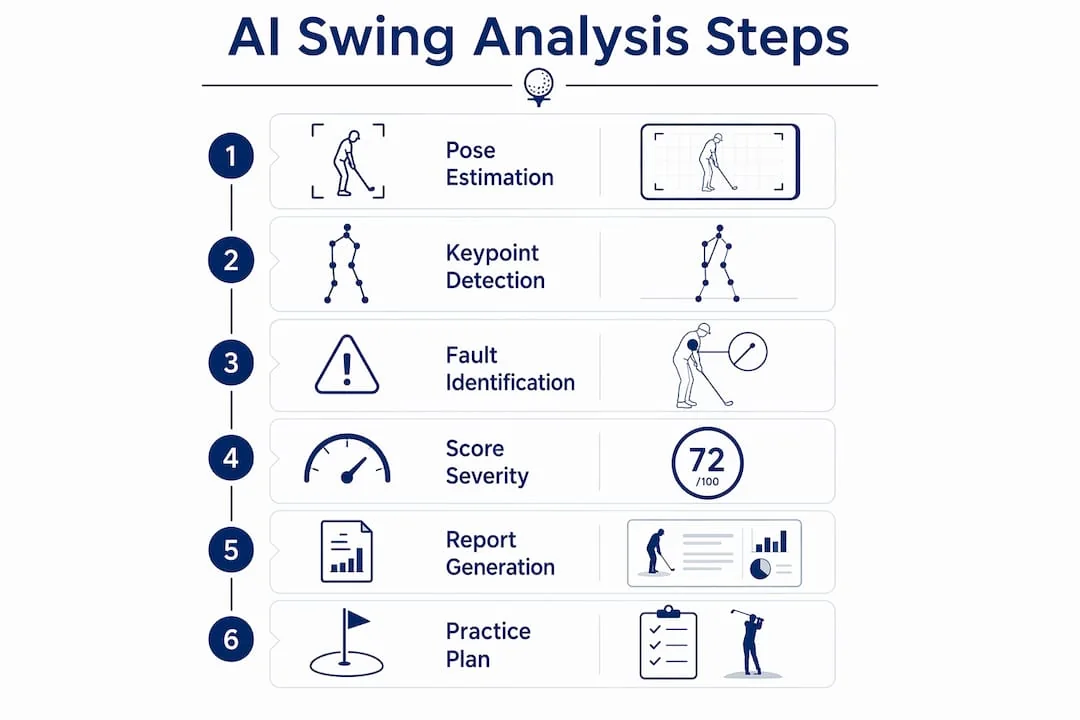
Instead of a vague list of swing tips, every analysis isolates your single root-cause fault, tracks 33 skeletal joints in 3D through impact, and pairs you with a focused drill plan.

Composite score with root-cause flaw detection and severity ratings.
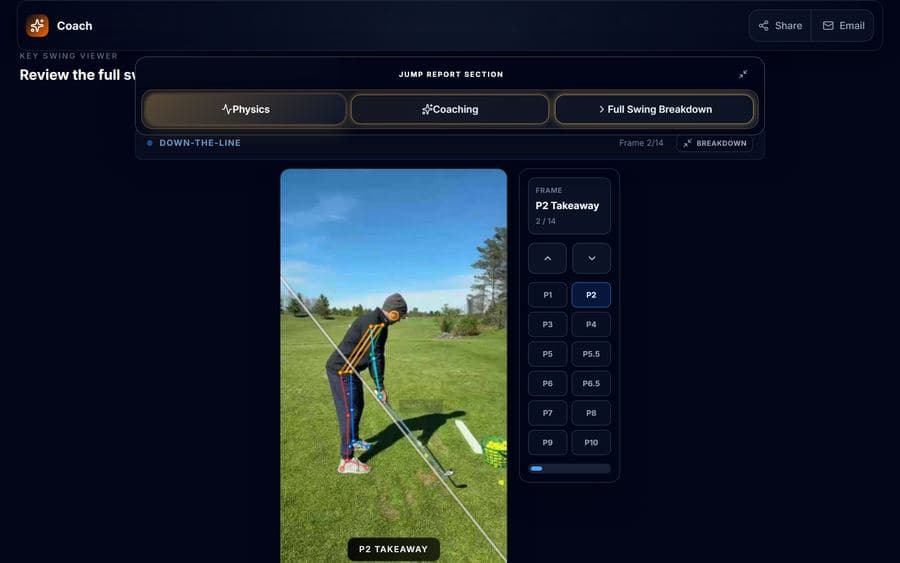
The Oracle physics engine tracks 33 joints across all swing phases.
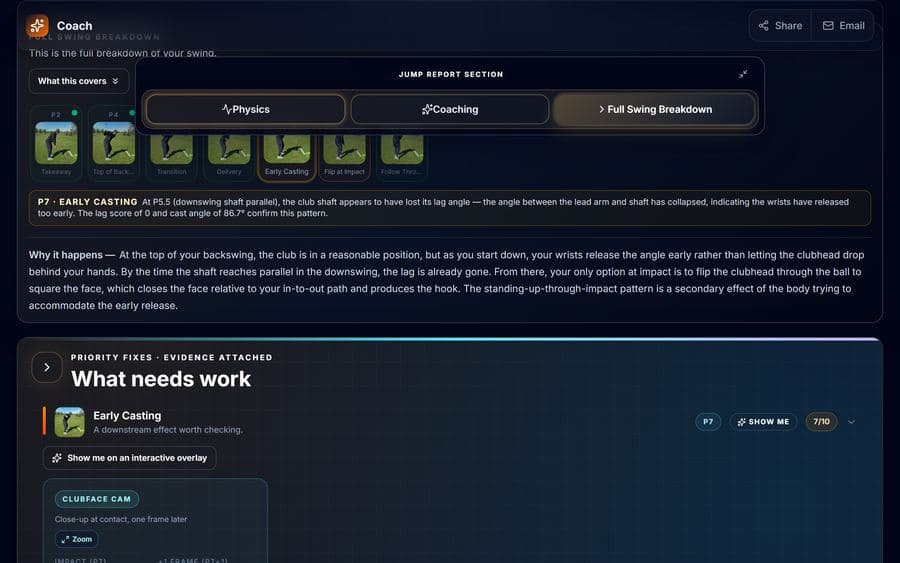
Personalized drills from certified coaches matched to your specific flaws.
Upload one video from your phone to diagnose your swing mechanics.