How to Stop Swaying in the Golf Swing: Turning Slide into Pure Rotation

Key takeaways
| Point | Details |
|---|---|
| A sway is lateral hip motion instead of rotational coil | Sliding the hips away from the target moves the swing center and low point behind the ball. |
| Pressure should load into the inside of the trail heel | Letting weight roll to the outside edge of the trail foot breaks the biomechanical brace and forces a lateral slide. |
| Centered rotation generates more speed with less effort | Rotating around a stable spine angle creates high rotational torque without erratic compensation. |
Quick answer
A sway occurs when the hips slide laterally away from the target during the backswing instead of rotating in place. To stop swaying, brace into the inside edge of your trail foot, allow your trail hip to turn back and behind you, and keep your head steady within its original address cylinder.
Golfers often mistake motion for power. When you see long-drive champions load back with dramatic athleticism, it is easy to assume they are shifting their entire body laterally to load up energy.
In reality, elite ball strikers move very little laterally during the backswing. They rotate around a stable spine axis, coiling their upper body against a braced lower half. When an amateur golfer sways their hips four inches to the right, their head and sternum follow, moving the bottom of the swing arc several inches behind the ball.
Why swaying destroys ball striking consistency
The fundamental flaw of a backswing sway is that it requires an equal and opposite lateral slide on the way down just to return the club to the ball. If you slide 4 inches back, you must slide exactly 4 inches forward in under 300 milliseconds.
If you slide forward too little, you hit the ball fat or top it weakly. If you slide forward too much, your upper body gets ahead of the ball, producing low line-drives and smothered hooks.
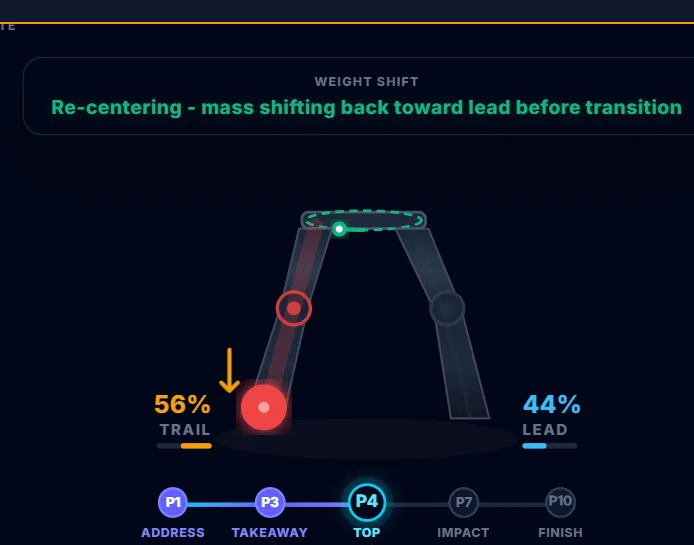
| Biomechanical Metric | Tour Pivot Benchmark | Lateral Sway Flaw | Swing Impact Result |
|---|---|---|---|
| Pelvis Lateral Shift (P1 to P4) | < 1.0 inch trail movement | 3.5 to 5.5 inches lateral slide | Low point shifts 3+ inches behind ball |
| Trail Knee Flex Retention | Maintains 15° to 20° stable flex | Knee locks straight or rolls outward | Spine angle reverses, killing coil tension |
| Trail Foot Pressure Vector | Loaded into inside heel/instep | Rolls onto outside shoe boundary | Inability to create ground reaction push |
| Impact Low Point Consistency | Automatic ball-first turf contact | Requires emergency lateral lunging | Frequent chunked irons and thin tops |
Drills to replace the slide with pure rotation
These two physical barrier drills will immediately stop your hips from sliding past your trail stance.
Essential anti-sway drills
Build the feeling of a tight, centered coil against a stable trail leg.


Dedicated fault guide
Connected swing fault guides
Swaying is directly linked with weight shift faults and hip mobility limitations.
Frequently asked questions
How do I know if I am swaying or rotating?
Check the position of your trail hip at the top of your backswing on face-on video. If your trail hip has drifted to the right of where it started at address, you are swaying. In a pure rotation, your trail hip turns back and slightly inward toward the target.
Should the hips move laterally at all during the golf swing?
Yes, but during the transition toward the target, not during the backswing. A subtle 2 to 3 inch lateral pressure shift to the lead side in transition is vital, but lateral sliding away from the target during the backswing destroys contact consistency.
Sources
- Titleist Performance Institute Sway and Slide Test Protocols Clinical assessment of pelvic mobility and lateral hip translation.
- Biomechanics of the Centered Golf Pivot Rotational kinetic efficiency vs lateral translation in elite amateurs.
How AI Golf School Diagnoses Your Swing
Instead of a vague list of swing tips, every analysis isolates your single root-cause fault, tracks 33 skeletal joints in 3D through impact, and pairs you with a focused drill plan.

Composite score with root-cause flaw detection and severity ratings.
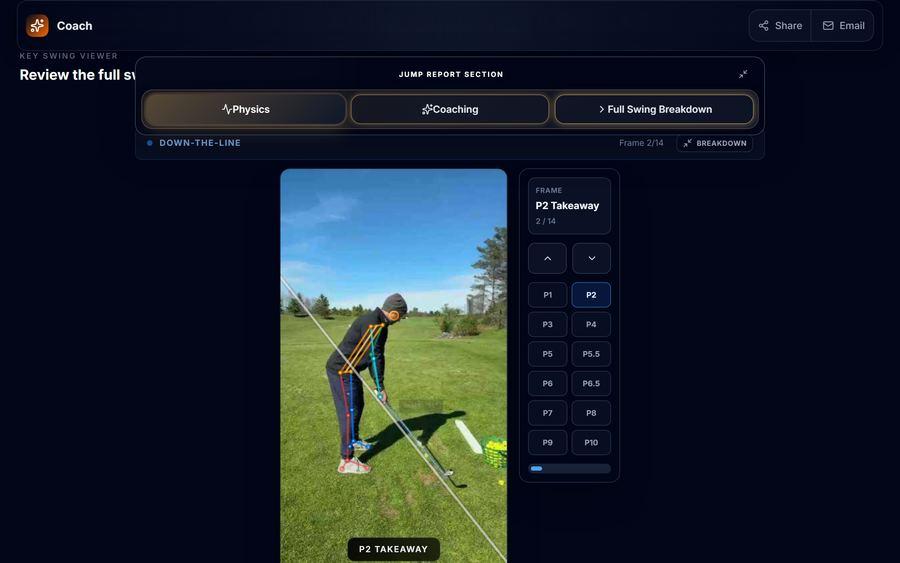
Swing Lens tracks 33 joints across all swing phases.
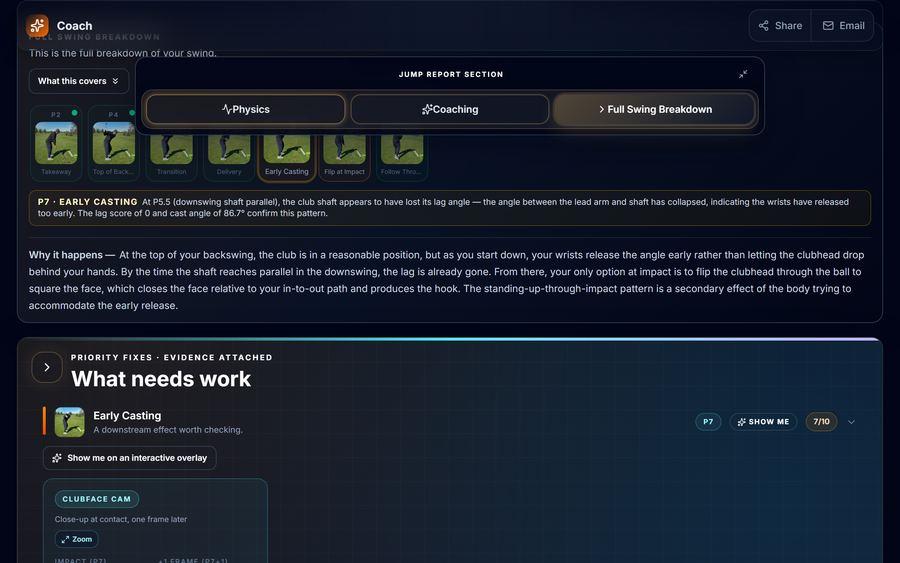
Personalized drills from certified coaches matched to your specific flaws.
Upload one video from your phone to diagnose your swing mechanics.