How to Stop Shanking the Golf Ball: Causes and Emergency Fixes
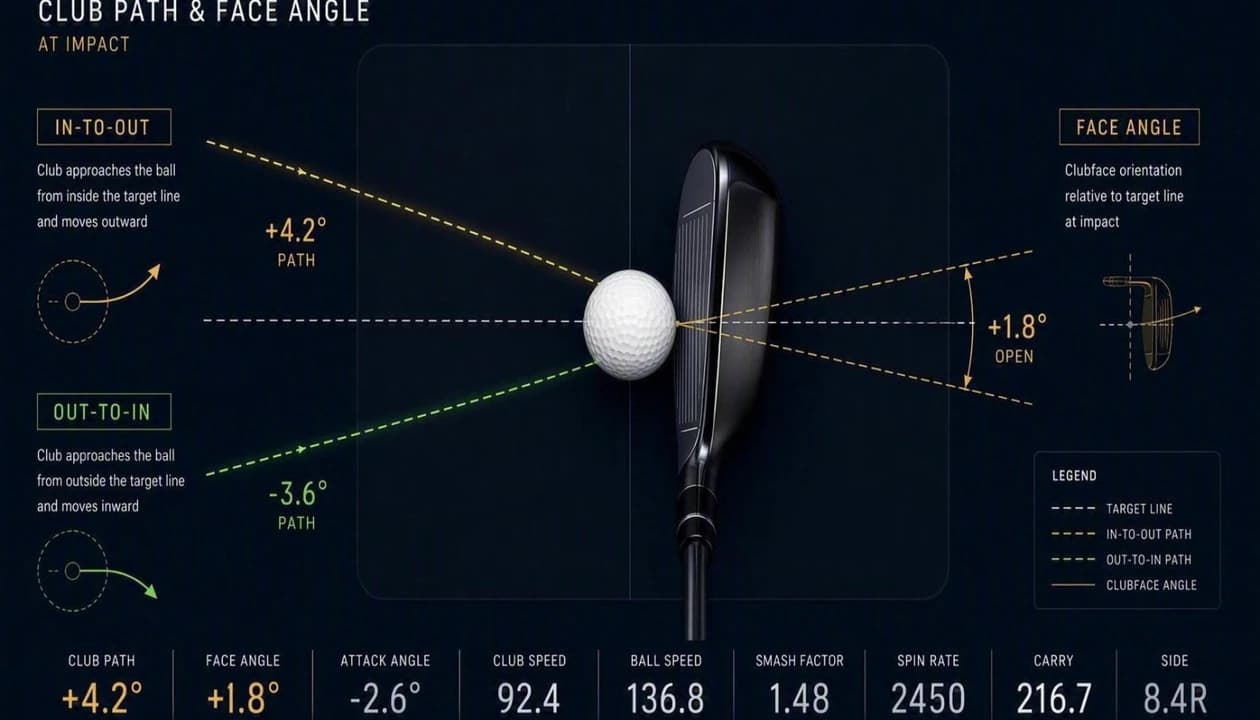
Key takeaways
| Point | Details |
|---|---|
| A shank is caused by the club neck (hosel) hitting the ball | The clubhead is traveling just half an inch farther away from the golfer body than it was at address. |
| Early extension is the primary biomechanical culprit | When the hips thrust forward toward the ball line during downswing, the hands and club are pushed outward. |
| Standing farther from the ball rarely cures the shank | Backing away makes golfers reach for the ball, which actually encourages the forward lunge through impact. |
Quick answer
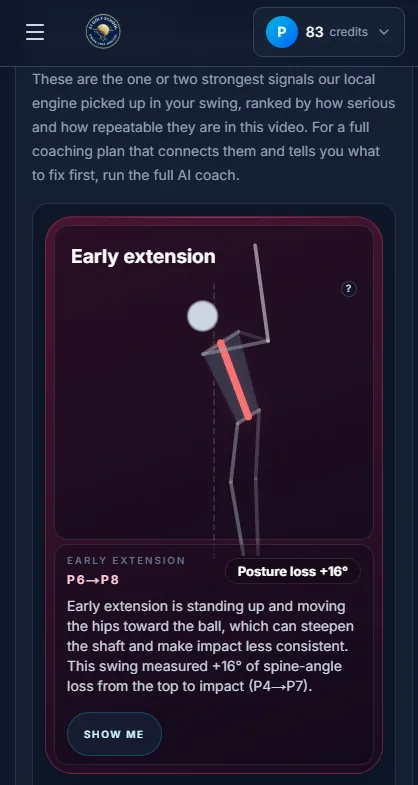
A shank occurs when the rounded neck (hosel) of the golf club strikes the ball, shooting it sideways at a 45-degree angle. Shanking is caused by the clubhead moving 0.5 to 1.0 inch farther away from your body at impact than at address: usually because your pelvis thrusts forward toward the ball line (early extension) or your weight rolls onto your toes.
No word in the game carries more dread than the shank. When a shank strikes, it does not just ruin a scorecard: it destroys confidence. Golfers who hit a shank on hole 4 often spend the remaining 14 holes swinging in terror, trying to guide the ball with rigid hands.
The natural human reaction to a shank is to stand farther away from the ball. But that reaction almost always makes the problem worse. When you stand too far away, you have to reach for the ball with your arms, which pulls your chest and balance forward onto your toes.
The biomechanics of a hosel strike
To cure the shank, you must understand the geometry of the clubhead. The sweet spot of an iron is separated from the hosel by less than three-quarters of an inch. That means a shank is not a completely broken swing: it is a swing where the clubhead was just half an inch off its intended radius.
| Kinematic Variable | Centered Strike Delivery | Hosel Shank Delivery | Mechanical Root Cause |
|---|---|---|---|
| Pelvis Distance to Ball Line | Maintains tush line (0 to 0.5 in thrust) | Thrusts 2.0 to 4.0 inches forward | Early extension shoves hands outward |
| Foot Pressure Distribution | Loaded into midfoot and lead heel | Rolls forward onto toes/balls of feet | Center of mass tips toward ball line |
| Hand Path Offset at Impact | Within 0.25 inches of address plane | Pushed 0.75+ inches outside address plane | Hosel aligns directly with golf ball |
| Clubface Angle at P7 | Square to slightly closed (0° to 2°) | Wide open face (> 5° open) | Exposes protruding hosel leading into strike |
Emergency drills to center your strike
These two field-tested drills provide instant tactile feedback to keep the clubhead tracking through the sweet spot.
Proven anti-shank drills
Practice these obstacle and alignment drills to immediately shift strike contact toward the center and toe of the club.


Dedicated fault guide
Read the comprehensive shanking guide
Explore our in-depth biomechanical breakdown of shanks with high-speed video examples.
Frequently asked questions
Why do good golfers suddenly start shanking?
Good golfers often shank when they try too hard to shallow the club from the inside. If they drop the club shallow without clearing their lead hip back, the arms run out of room and are pushed forward toward the hosel.
What is the fastest on-course emergency fix for a shank?
Feel your weight firmly on your heels at address and focus on brushing the ground slightly toward the toe of the club. Keeping your trail heel on the ground longer through impact stops your pelvis from lunging forward.
Sources
- Titleist Performance Institute Pelvic Motion Analysis Correlation between pelvic thrust distance and heel contact.
- PGA Teaching Manual: Impact Geometry Analysis of hosel strikes and low point shifts.
How AI Golf School Diagnoses Your Swing
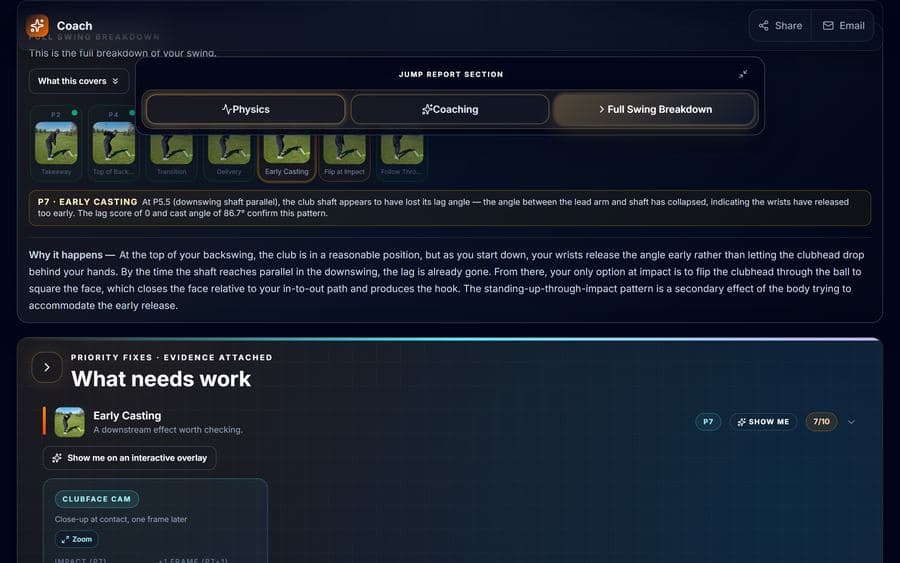
Instead of a vague list of swing tips, every analysis isolates your single root-cause fault, tracks 33 skeletal joints in 3D through impact, and pairs you with a focused drill plan.
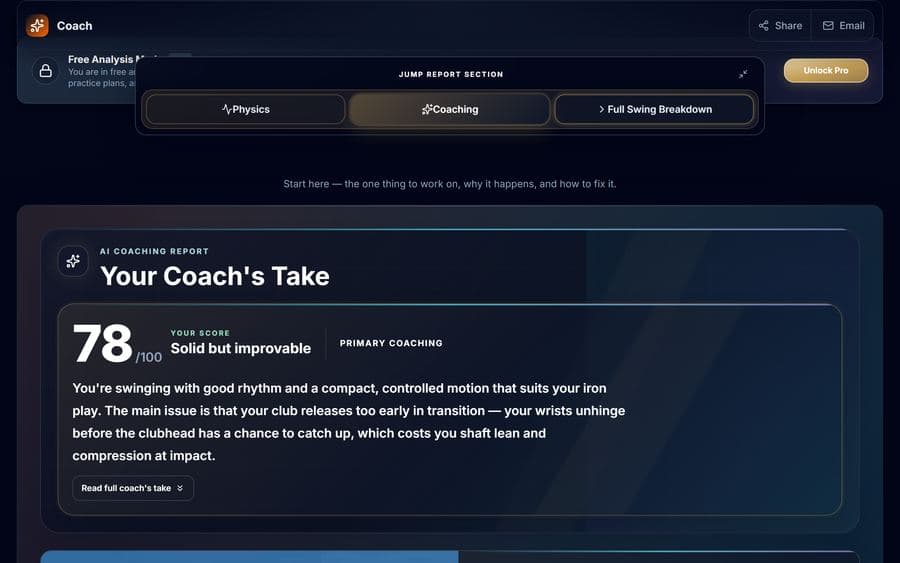
Composite score with root-cause flaw detection and severity ratings.
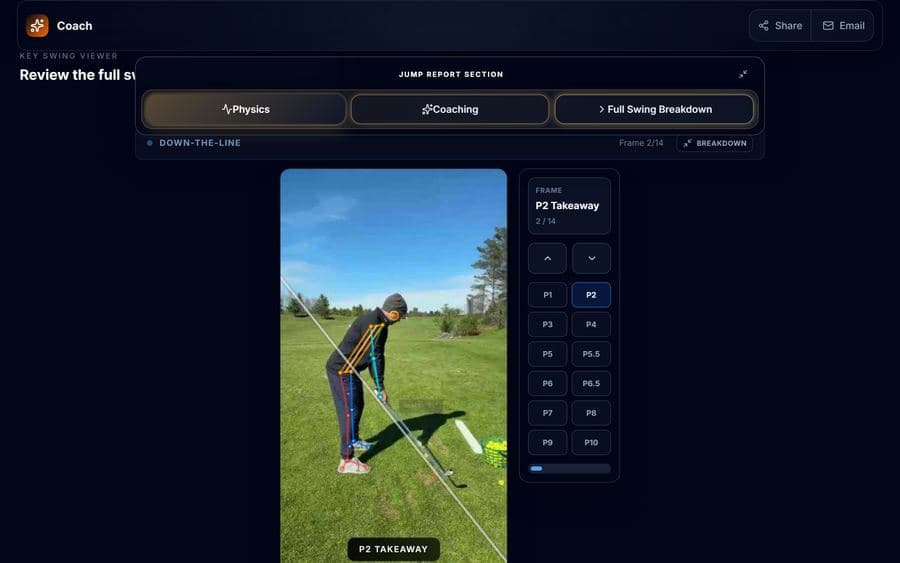
Swing Lens tracks 33 joints across all swing phases.
Personalized drills from certified coaches matched to your specific flaws.
Upload one video from your phone to diagnose your swing mechanics.