Dr. Kwon's Connection & Rhythm Drill
Curated PGA Drill by Dr. Kwon (via Chris Como Golf)
Transition
3 sets of 10 slow rehearsal reps
Golf club, alignment stick (optional)
Intermediate
Why This Drill Works (Kinetic Mechanics)
The swing must be one continuous, orchestrated motion that prevents the two phases (backswing and downswing) from being separated [0:05]. This drill trains the correct timing to avoid rotating the body first, then swinging the arms.
How to Perform the Drill
Follow these step-by-step instructions. Rehearse slowly to build proper motor patterns before adding full swing speed.
- 1
Step 1
Stage 1 (Rhythm): Make a small 'bouncing' motion at the top and swing through. Use the count 'one, two, three, and then let it go' to establish a continuous, connected motion.
- 2
Step 2
Stage 2 (Full Motion): Execute the drill using a full, larger swing motion, maintaining the established rhythm and flow.
- 3
Step 3
Stage 3 (Introduce Shift): Introduce a dynamic pressure or shift motion in the transition before swinging, ensuring it remains connected to the backswing.
- 4
Step 4
The primary goal is to make the end of the backswing and the beginning of the downswing feel like a single, unified motion.
What Good Feels Like
Focus on smooth tempo and maintaining body connection through impact. Your body and club should move as a single synchronized unit.
Common Mistake to Avoid
Rushing transition before completing backswing or lunging upper body forward towards ball at impact. Keep movement controlled.
Swing Faults & Ball Flights Addressed
Comprehensive Guides Featuring This Drill
Slow the backswing down so your body turn, not your hands, starts the club moving, then let the lower body initiate the downswing before your arms react. Most tempo problems are really rushing problems: the transition fires too fast. Train a 3:1 backswing-to-downswing ratio with counting or metronome drills until it's automatic.
Connection means the arms stay in front of the chest so the body powers the club rather than the hands. You lose it when the arms lift independently in the takeaway, when the trail elbow flies out at the top, or when the body stalls through impact and the arms have to take over. Fix it by making the chest start and finish the swing, using a headcover or towel under the arm as feedback rather than trying to hold the arms in place by feel.
Related Practice Drills
View All Drills ↗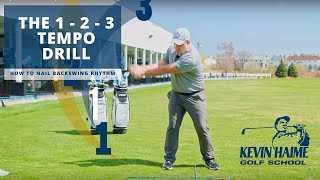
Try Our 1-2-3 Tempo Drill for Better Long Irons
Intermediate · Poor tempo

The Elephant's Trunk (Sling Drill)
Intermediate · Poor tempo

The Count to Two Drill (Torso Engagement)
Beginner · Poor tempo

Use a Metronome to Find the Perfect Golf Swing Tempo
Advanced · Poor tempo